When people hear "set design," they often think of film and theatre. A living room built on a soundstage. A painted backdrop for a musical. But the discipline has expanded far beyond those origins. Today, set design drives some of the most impactful work in fashion, brand marketing, experiential events, and public art. Anywhere a physical environment needs to be constructed to support a narrative, a set designer is involved.
In Calgary, this work is accelerating. The city's growing fashion scene, its festival culture, its expanding film and television industry, and a new wave of brands investing in physical experiences are all creating demand for set designers who can build environments that perform. Not permanent architecture. Not decoration. Designed, built spaces that serve a specific purpose for a specific moment, then disappear.
What Is Set Design?
Set design is the practice of creating built environments for a defined context: a show, a shoot, an event, a film, an activation. It sits at the intersection of architecture, art direction, and fabrication. A set designer must think spatially, structurally, and visually, all within the constraints of budget, timeline, and often a single use.
The terminology can overlap. Stage design typically refers to performance venues and live shows. Scenic design comes from the theatre tradition and focuses on creating the visual world of a production. Set design encompasses all of this but extends into commercial, brand, and experiential contexts. A fashion show runway is set design. A branded pop-up environment is set design. A festival installation that visitors walk through is set design. The common thread is that someone has designed and built a physical space to support an experience.
What distinguishes strong set design from simple staging or decoration is intentionality. Every material, every surface, every sight line, every proportion has been considered. The space is not dressed. It is designed. That distinction matters because audiences can feel the difference, even if they cannot articulate it. A well-designed set creates a sense of immersion. A poorly designed one feels like a backdrop.
Set Design for Fashion Shows
Fashion shows are one of the most demanding set design contexts. The environment must support the collection being shown, direct audience attention, manage the flow of models, accommodate lighting and sound, create opportunities for photography and video, and do all of this within a space that may need to be built and struck in a single day.
At PARKLUXE 2024, held at The Ampersand in Calgary, KINN Studios designed the set for the runway presentations. The challenge was to create an environment that felt architecturally intentional without competing with the garments. The set needed to establish a mood, define the runway space, and give the audience a sense of entering a designed world, all while remaining functional for multiple designers showing across the event.
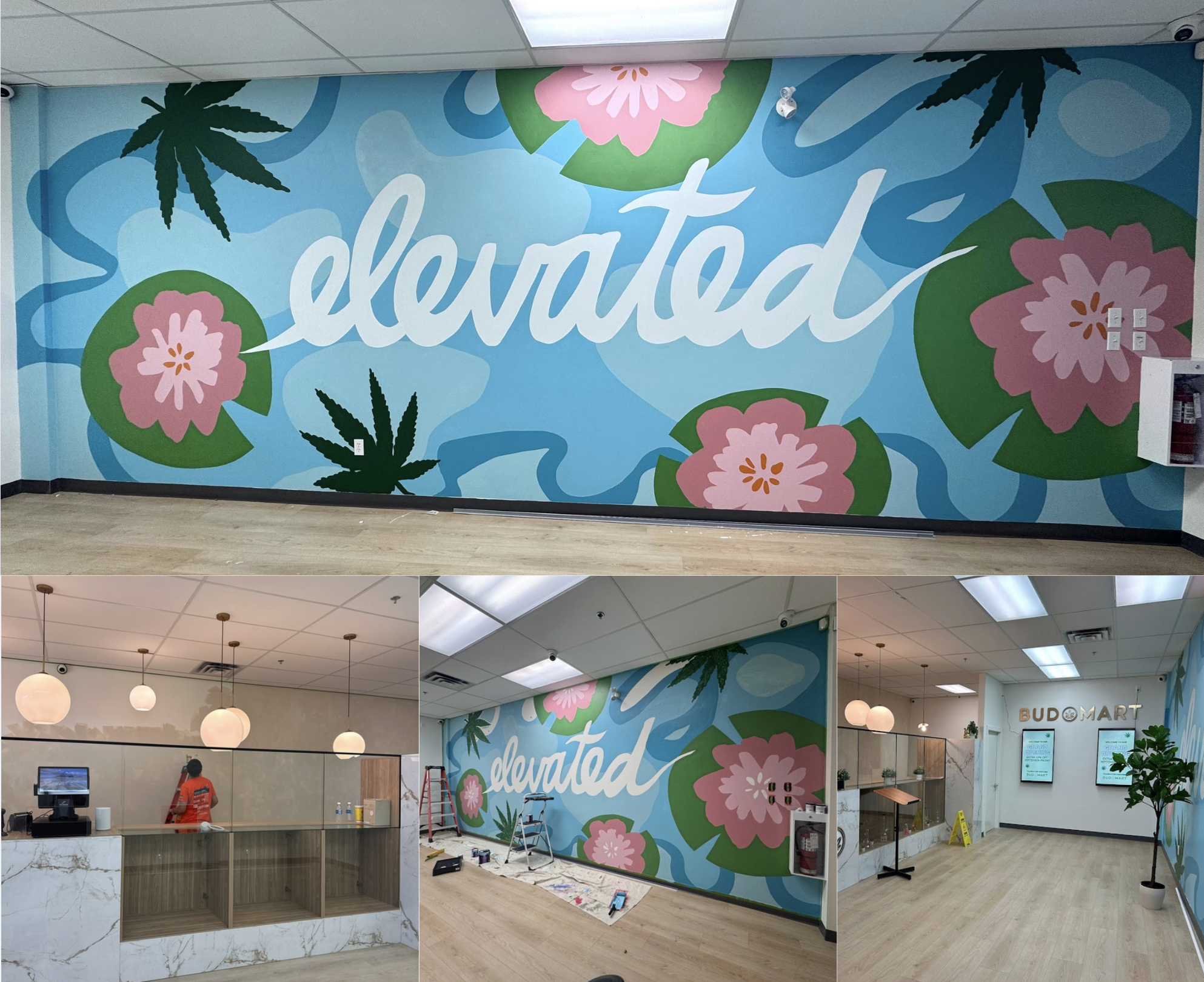
The best fashion show sets do not just provide a surface for models to walk on. They create a spatial narrative. The audience's experience begins the moment they enter the venue: what they see first, how the space channels their movement toward seating, what the runway environment communicates before the first look appears. These are architectural questions, and they require architectural thinking.
Calgary's fashion scene is growing. Events like PARKLUXE, local designer showcases, and brand launch presentations are creating consistent demand for set design that goes beyond draping fabric on a pipe-and-drape frame. Designers and brands producing shows in Calgary increasingly understand that the set is not a background element. It is part of the presentation.
We don't just build backdrops. We design environments you can walk through.
Set Design for Brand Activations
Brand activations are one of the fastest-growing areas of set design work. When a brand wants to create a physical environment that embodies its identity, whether for a product launch, a pop-up experience, an influencer event, or a trade show, that environment is a set. It needs to be designed, engineered, fabricated, installed, and eventually struck.
The difference between a brand activation that drives social sharing and one that feels generic is almost always the quality of the set design. Photo-worthy installations are not accidental. They are spatially designed to create specific compositions. The angles that work on camera, the lighting that flatters, the branded elements that read clearly in a photograph without feeling forced: all of this is set design thinking applied to a marketing context.
Effective experiential design for brand activations also accounts for something that traditional scenic design often does not: efficiency of strike. These environments are temporary by nature. The design must consider not only how the set looks and feels during the event but how quickly and cleanly it can be disassembled and removed. Materials are selected not just for appearance but for weight, modularity, and reusability. Structures are engineered to be assembled without permanent fasteners. The best brand activation sets look permanent but are designed to vanish.
For brands in Calgary exploring experiential architecture and physical brand environments, the set design discipline offers a framework for thinking about temporary spaces with the same rigour that architects bring to permanent ones.
Set Design for Cultural Events and Festivals
Calgary has one of the strongest festival cultures of any mid-size city in North America. BUMP Festival, Beakerhead, the Calgary Stampede, and a growing calendar of cultural celebrations create regular opportunities for set design at an urban scale.
Festival installations are set design in the public realm. A large-scale interactive structure at Beakerhead is a set: it creates an environment that visitors enter, move through, and experience. A Stampede activation for a national brand is a set: it must communicate a brand identity in a high-traffic outdoor environment, withstand weather and crowds, and create moments that drive engagement. A BUMP Festival installation that transforms a laneway or parking lot is a set: it redefines how people perceive and use a space, even if only for a few days.
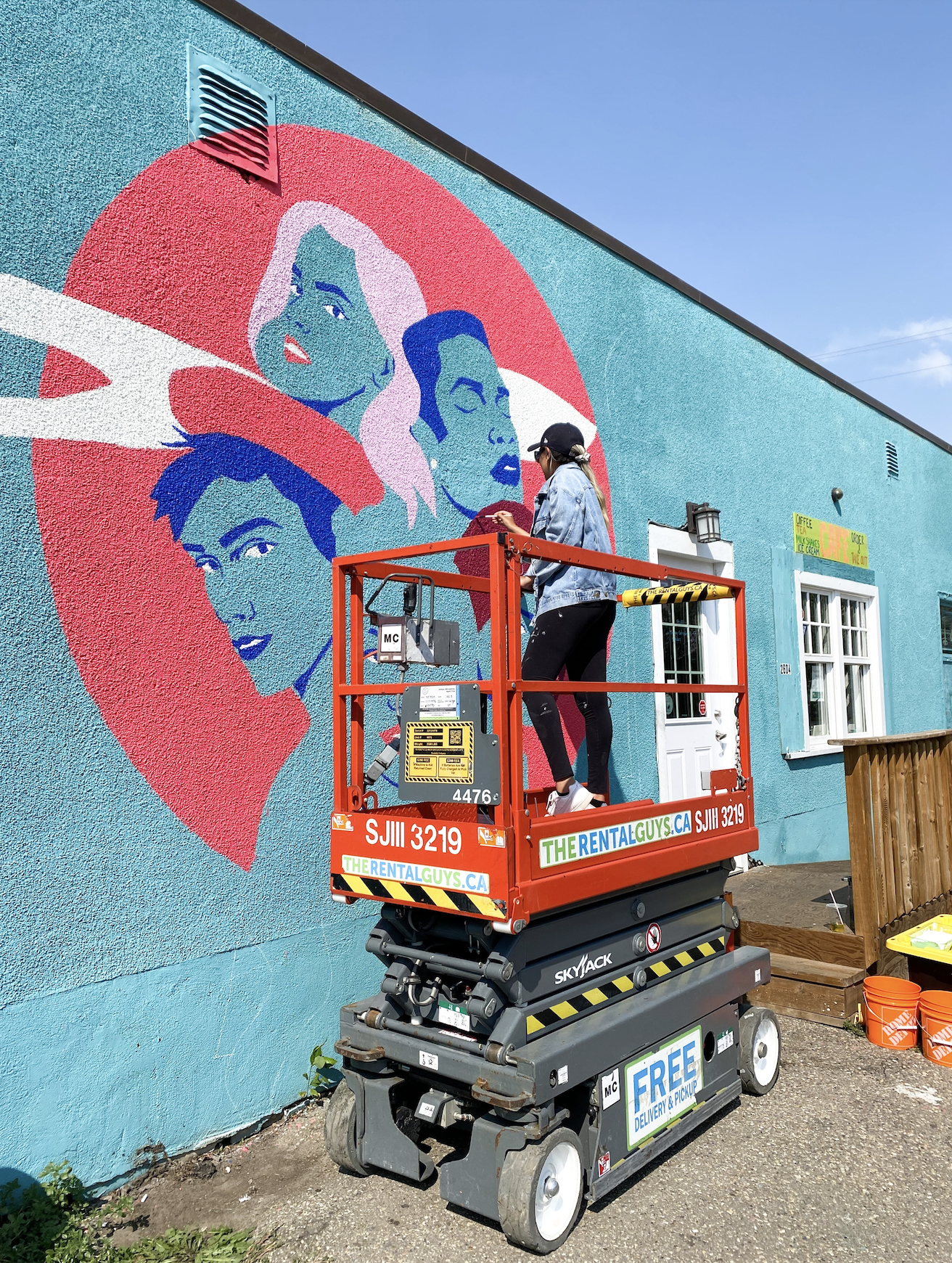
Cultural celebrations add another layer. Events celebrating Diwali, Lunar New Year, Vaisakhi, Indigenous culture, and other traditions often require custom-built environments that honour cultural aesthetics while meeting the practical demands of public gatherings. This is set design work that requires both cultural sensitivity and technical execution.
Public art itself can be understood as a form of set design for cities. When an artwork transforms a plaza, a streetscape, or a building facade, it is creating a temporary or permanent environment that changes how people experience a place. The skills are the same: spatial thinking, material knowledge, structural awareness, and the ability to translate a concept into a built reality. Our work in spatial storytelling for events draws directly on this overlap between public art and set design.
The Architecture Advantage in Set Design
Most set designers come from theatre or film backgrounds. Their training emphasizes visual composition, narrative, and the painted or dressed surface. This produces excellent work in those contexts. But when set design moves into fashion shows, brand activations, festivals, and large-scale installations, the demands shift. The sets are bigger. The loads are heavier. The materials are real, not painted flats. The public interacts with the work physically, not just visually from a fixed seat.
This is where an architecture background becomes a significant advantage. A set designer trained in architecture, particularly at the Master of Architecture level, brings a different set of capabilities to the work:
- Structural engineering awareness. Understanding how loads transfer through a structure, what a material can span, and where a connection needs reinforcement. This matters when you are building a 12-foot freestanding installation that people will lean against, or a raised platform that needs to support 30 people.
- Material specification. Knowing the properties of materials beyond their appearance: weight, durability, fire rating, weathering behaviour, machinability. Selecting the right material for a temporary structure is different from selecting it for a building, but the knowledge base is the same.
- Construction documentation. Producing drawings that fabricators can build from. Not sketches. Not mood boards. Dimensioned, detailed drawings and 3D models that communicate exactly what needs to be built, how it connects, and what tolerances are acceptable.
- Spatial modelling. Working in three dimensions from the start, using 3D software to test proportions, sight lines, lighting conditions, and user flow before anything is fabricated. This reduces surprises on site and gives clients confidence in what they are approving.
At KINN Studios, this architectural foundation shapes every set design project. We approach temporary environments with the same spatial rigour as permanent ones. The fact that a set exists for three days instead of thirty years does not reduce the importance of getting the proportions, materials, and details right. If anything, it increases it: there is no time for revisions once the set is on site. You can explore this approach further in our experiential architecture service.
How Much Does Set Design Cost in Calgary?
Set design costs vary widely depending on scale, materials, complexity, and timeline. Here are general ranges for Calgary-based projects in 2026:
- Small event sets (brand pop-ups, intimate launch events, photo activations): $3,000 to $8,000. These typically involve a focal installation, branded elements, and spatial planning for a contained area.
- Fashion show sets (runway environments, designer presentations, fashion week installations): $8,000 to $25,000. Costs depend on the venue, the number of shows, the complexity of the set, and whether the environment needs to be reconfigured between presentations.
- Large-scale festival installations (public art sets, major brand activations, multi-day festival environments): $15,000 to $75,000+. At this scale, structural engineering, permitting, weather protection, and multi-day install and strike schedules all factor into the budget.
Several factors affect where a project falls within these ranges:
- Materials. Painted MDF and fabric is significantly less expensive than milled hardwood, metal fabrication, or specialty finishes. Material choice is the single largest variable in set design cost.
- Size and footprint. A 10-by-10-foot branded vignette is a different proposition from a 2,000-square-foot immersive environment.
- Complexity. Integrated lighting, moving elements, interactive components, or technically demanding structures add engineering and fabrication time.
- Timeline. Rush timelines compress fabrication schedules and often require overtime labour. A 6-week timeline is significantly less expensive than a 2-week one for the same scope.
- Reusability. Sets designed for a single use can be built with simpler connections and less durable materials. Sets intended for touring or repeated deployment need modular construction and more robust engineering, which adds cost upfront but reduces cost per use.
These ranges are for design and fabrication. They do not typically include venue rental, AV production, catering, or event management, which are separate line items. For a complete picture of what a designed event environment costs, see our guide to brand event design in Calgary.
Working with KINN Studios on Set Design
Our process for set design projects follows a clear sequence, whether the project is a fashion show runway or a festival-scale installation:
- Brief. We start with the context: what is the event, who is the audience, what is the set meant to communicate, and what are the constraints (venue, budget, timeline, load-in windows).
- 3D model. We develop the set design in 3D from the earliest stage. Clients see proportions, materials, and spatial relationships in a model before any fabrication begins. This is where we test sight lines, photograph angles, and user flow.
- Material selection. We specify materials based on appearance, budget, structural requirements, and environmental considerations. We source locally in Calgary wherever possible.
- Fabrication. We produce construction documentation and work with trusted fabrication partners in Calgary to build the set. We review samples and mock-ups for critical details.
- Install. We manage or oversee the on-site installation to ensure the built set matches the design intent. This includes spatial adjustments, lighting coordination, and final detailing.
- Strike. We plan the disassembly and removal of the set as part of the design process, not as an afterthought. Clean, efficient strike is a sign of a well-designed set.
Set design in Calgary is not a niche service. It is a growing discipline driven by the city's expanding fashion, festival, film, and brand event landscape. If you are planning a project that requires a built environment, whether for a runway, a brand activation, a cultural celebration, or a public installation, we would like to hear about it.
You can explore our approach to designed environments through our experiential architecture and experiential design services, or see our work on projects like Ma Cherie.