Walk down Stephen Avenue on a Saturday afternoon and you feel it immediately. The street has a pulse. People linger at patios, drift toward buskers, pause at sculptures, photograph murals. It is not the architecture alone doing this. It is not the retail mix. It is a combination of spatial decisions, public art, streetscape design, and programming that together create the feeling that this is a place worth being.
That feeling is not an accident. It is placemaking. And in Calgary, where new communities are being built at a pace that few Canadian cities can match, the question of how to create that feeling from scratch is becoming one of the most important conversations in urban development.
What Is Placemaking?
Placemaking is the process of designing public spaces that give communities identity and purpose. It sits at the intersection of urban design, public art, landscape architecture, and community engagement. At its core, placemaking asks a simple question: what would make people want to stop here, stay here, and come back?
The term emerged from the work of urbanists like Jane Jacobs and William H. Whyte, who studied what made certain streets and plazas thrive while others, often better funded and more expensively built, felt dead. Their finding was consistent: the spaces that worked were designed around human behaviour, not around vehicles, sightlines to buildings, or abstract planning principles. They had seating. They had shade. They had reasons to linger. They had edges that felt safe and centres that felt active.
Modern placemaking goes well beyond benches and landscaping. It encompasses public art, wayfinding systems, temporary installations, seasonal programming, lighting design, acoustic considerations, and the integration of local culture and history into the physical environment. The goal is not to decorate a space. It is to create a destination. A place that people identify with, that becomes part of how they describe their neighbourhood, that draws foot traffic and economic activity not because of what is sold there but because of what it feels like to be there.
Why Placemaking Matters for Calgary
Calgary is one of the fastest-growing cities in Canada, and that growth is creating a challenge that few people talk about directly: new communities without identity. Dozens of neighbourhoods on Calgary's edges are being built simultaneously, and while the homes are well-constructed and the infrastructure is sound, many of these communities feel interchangeable. The street patterns are similar. The commercial nodes look the same. There is no landmark, no gathering point, no piece of public art or designed space that makes one community feel distinct from the next.
This is where placemaking becomes a competitive advantage. Developers who invest in neighbourhood character, not just floor plans and finishes, are finding that placemaking elements drive sales, increase property values, and accelerate the formation of community identity. A well-designed central plaza, a commissioned public artwork, a streetscape that invites walking and gathering: these are not aesthetic luxuries. They are the things that make a neighbourhood feel like somewhere rather than anywhere.
Calgary's established Business Improvement Areas have understood this for years. The 17th Avenue BIA invests consistently in streetscape improvements, public art, and seasonal activations that keep the avenue feeling vibrant year-round. Kensington has built an identity around its walkability, independent retail, and community-facing public spaces. Inglewood has leaned into its arts and heritage character, using murals, gallery walks, and adaptive reuse of historic buildings to create a neighbourhood brand that draws people from across the city. Marda Loop has invested in community-driven placemaking initiatives that bring residents into the design conversation.
At the municipal level, the City of Calgary has embedded public art into its capital infrastructure program through the Art and Culture Municipal policy, requiring that a percentage of eligible capital project budgets be allocated to public art. Calgary Arts Development supports placemaking through grants, programming, and advocacy. The infrastructure for placemaking exists. The question is how well it is being used.
A neighbourhood without a gathering point is a subdivision. Placemaking is what turns housing into community.
Placemaking Projects in Calgary
Some of the most effective placemaking in Calgary has come from projects that are temporary by design. Temporary installations test ideas, activate underused spaces, and create moments of community engagement that permanent infrastructure often cannot. They also demonstrate to stakeholders, whether developers, BIAs, or municipal bodies, what a space could become.
Freeflow, 17th Avenue (2021)
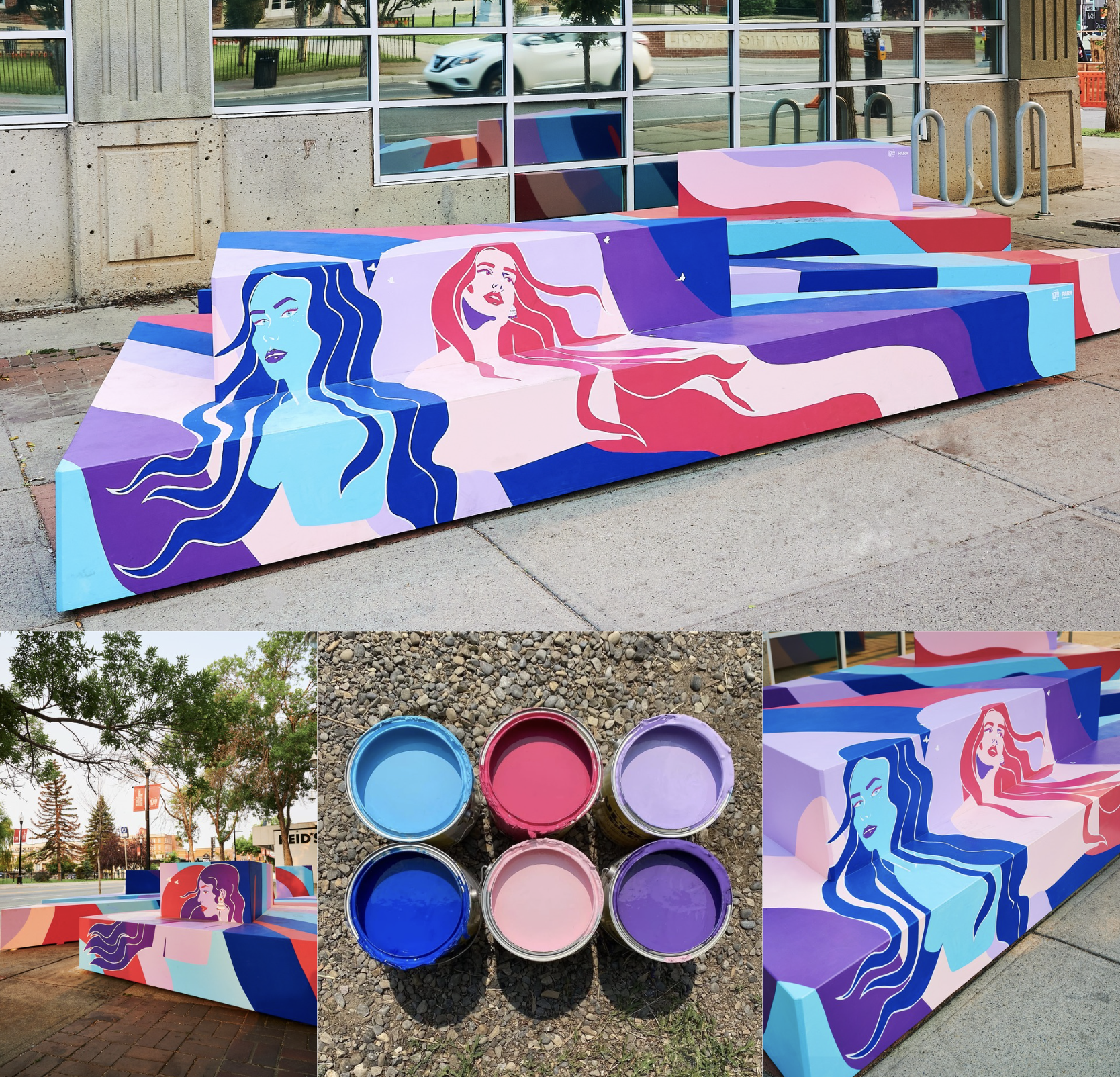
Freeflow was a temporary public art installation on 17th Avenue SW that transformed a section of streetscape into an immersive, interactive environment. Designed and fabricated by KINN Studios, the installation used flowing, sculptural forms to create a visual landmark on the avenue, drawing pedestrian traffic and generating thousands of social media interactions. The project demonstrated how a single, well-designed intervention could change the character of an entire block. It was not permanent, but its impact on how people experienced that stretch of 17th Avenue was immediate and measurable. Projects like Freeflow are the kind of site-specific art installations that give a streetscape identity overnight.
East Village Public Art Walk
East Village is one of Calgary's most compelling case studies in placemaking at the neighbourhood scale. A decade ago, the area was largely vacant and disconnected from the rest of the city. Today, it has one of the most concentrated collections of public art in Calgary, integrated into the streetscape, the riverwalk, and the public plazas that anchor the community. The art was not added after the neighbourhood was built. It was designed into the master plan from the beginning, giving East Village an immediate sense of identity and cultural weight that most new communities take decades to develop. The Bloom sculpture, the Wonderland head, the various integrated works along the RiverWalk: these are not decorations. They are the landmarks that define the neighbourhood.
Beltline Murals
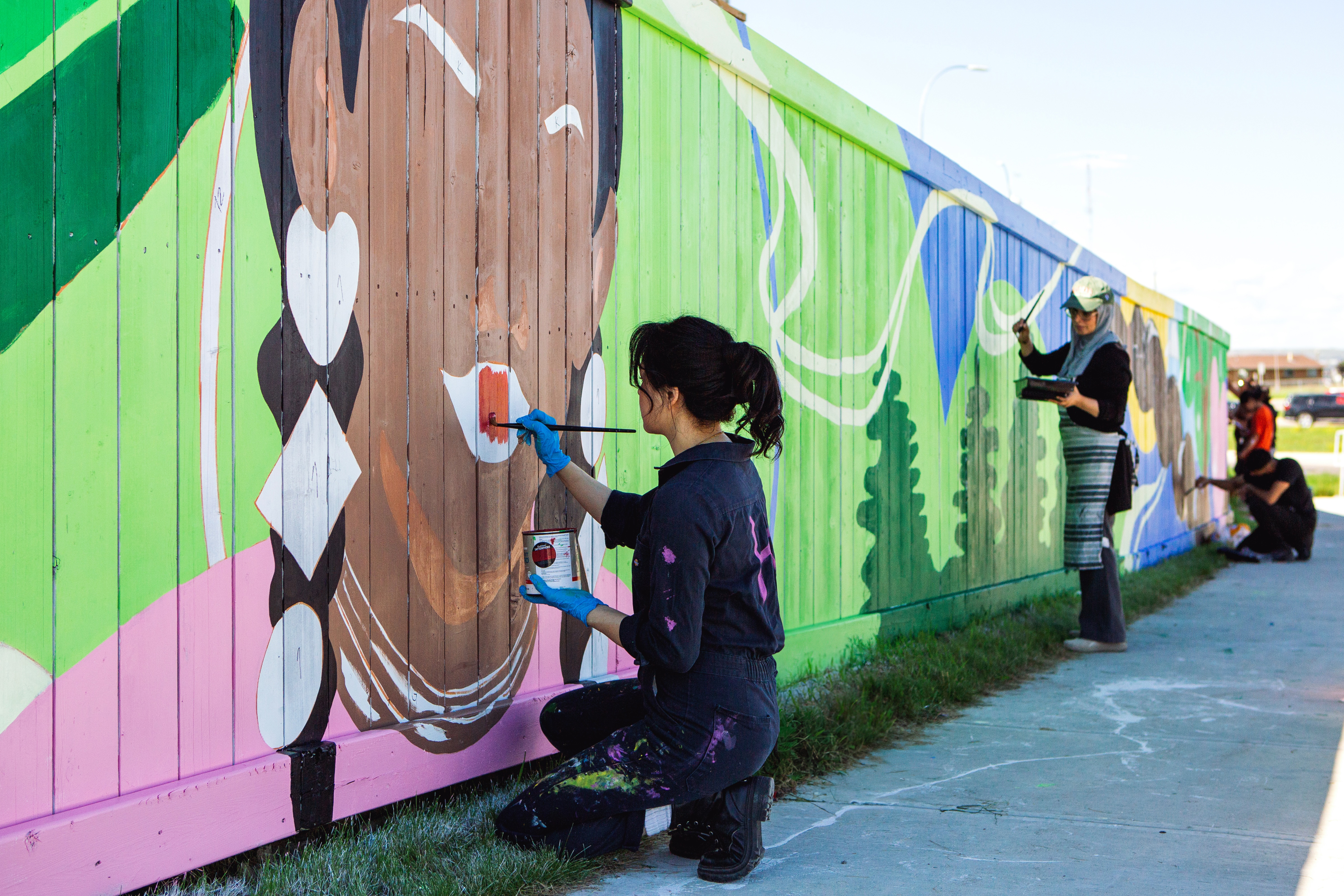
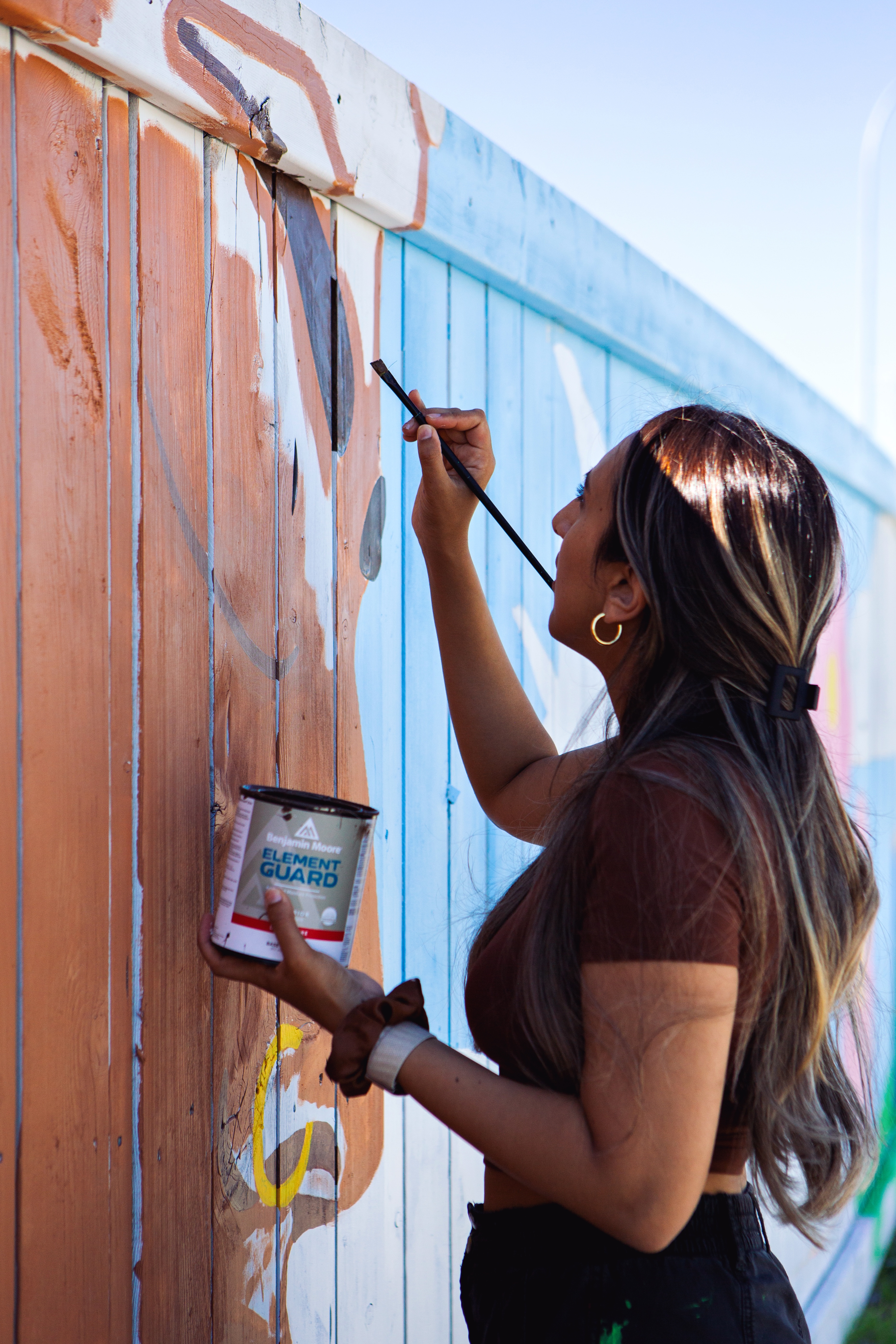
The Beltline's mural program is one of the most visible examples of placemaking through art in Calgary. Large-scale murals on building facades serve multiple functions simultaneously: they create wayfinding landmarks, they signal the cultural identity of the neighbourhood, they attract foot traffic and photography, and they transform blank walls into points of engagement. The cumulative effect of dozens of murals across the Beltline is a neighbourhood that feels creatively alive, a place where art is part of the everyday environment rather than something confined to galleries. For communities exploring how to fund and commission murals, the Beltline offers a proven model.
Marda Loop Community Placemaking
Marda Loop has taken a community-driven approach to placemaking, involving residents and local businesses in the design conversation rather than imposing solutions from above. Workshop-based placemaking processes, where community members contribute ideas for public space improvements, have informed streetscape upgrades, public seating installations, and seasonal programming. This participatory model is particularly effective in established neighbourhoods where the community already has a strong sense of identity and wants to see that identity reflected in the public realm. KINN Studios participated in these community workshops, contributing spatial design expertise to the collaborative process.
The Architecture-First Approach to Placemaking
Most placemaking in Canadian cities is led by landscape architects, urban planners, or community development consultants. These disciplines bring essential skills to the process: ecological design, community engagement methodologies, policy navigation, and infrastructure planning. But there is a gap that often shows up in the final result. The spaces work functionally but lack the spatial and material quality that makes people want to stay.
Architecture brings something different to placemaking. Founder Kiran Rai-Bhullar holds a Master of Architecture from the University of Calgary, bringing genuine architectural expertise to every placemaking project. That training provides an understanding of how people move through and occupy three-dimensional space. How materials age and feel underfoot. How light changes across seasons and times of day. How scale and proportion affect whether a space feels intimate or exposed, welcoming or forbidding. These are not abstract concerns. They are the factors that determine whether a public space becomes a gathering point or a pass-through.
KINN Studios brings an architecture and art-driven approach to placemaking. Rather than starting with programming or policy, we start with spatial design: how the space is shaped, how people will move through it, what they will see and touch, and how site-specific art can anchor the experience. This approach is informed by the psychology of how people respond to public art and designed environments. The art is not applied to the space after the fact. It is designed with the space, as part of the same spatial and material strategy.
In Calgary's climate, this matters enormously. A placemaking strategy that works in June but fails in January is only half a strategy. Designing for all seasons means considering wind protection, solar exposure, material durability, lighting for short winter days, and programming that gives people reasons to be outdoors even in cold months. It means thinking about how snow accumulates and melts, how ice affects surfaces, and how the quality of winter light can be used rather than fought against. Architecture, more than any other design discipline, is trained to work with these constraints.
Placemaking is not decoration applied to infrastructure. It is the design of the infrastructure itself.
How Developers and BIAs Can Use Placemaking
For developers building new communities, placemaking is one of the most effective tools for differentiation. When every new neighbourhood offers similar home styles, similar amenities, and similar proximity to schools and transit, the character of the public realm becomes the differentiator. A commissioned public artwork at the community entrance. A designed gathering space at the commercial node. Streetscape elements that create a visual identity. These are the things prospective buyers remember, photograph, and share. They are the things that make a community feel established before it is fully built out.
For BIAs in existing neighbourhoods, placemaking offers a path to increased foot traffic and economic vitality. Murals, temporary installations, seasonal activations, improved streetscape furniture, and wayfinding signage all contribute to making a commercial district feel like a destination rather than a utility stop. The most effective BIA placemaking strategies are sustained rather than one-off: a consistent investment in the public realm that builds over years into a recognizable neighbourhood identity.
Funding for placemaking in Calgary comes from several sources. Calgary Arts Development (CADA) offers microgrants and project grants for public art and community-engaged art projects. The City of Calgary's Art and Culture Municipal (ACM) program integrates public art funding into capital infrastructure projects. Developers can allocate a portion of their marketing or amenity budgets to placemaking elements that serve both the community and the sales process. BIAs can leverage their levy revenues and apply for matching grants from the City. Federal programs through the Canada Council for the Arts and Infrastructure Canada also support public art and public space improvements in some cases.
- New developments: Commissioned public art, designed gathering spaces, streetscape elements, community identity through site-specific installations
- Existing neighbourhoods: Murals, temporary installations, seasonal activations, wayfinding systems, improved public seating and lighting
- Funding sources: CADA microgrants, City of Calgary ACM program, developer contributions, BIA levy revenues, federal arts and infrastructure grants
Working with KINN Studios on Placemaking
KINN Studios works with municipalities, developers, and Business Improvement Areas on placemaking projects that combine spatial design with site-specific art. Our process is designed to move from site analysis through to installed work, with community engagement built into the approach where the project calls for it.
Our placemaking process typically follows this sequence:
- Site analysis: Understanding the physical, social, and climatic conditions of the space. How people currently move through it. What is missing. What is already working.
- Community engagement: Where appropriate, workshops and conversations with the people who use the space daily. Their insights shape the design direction.
- Concept design: Spatial and artistic concepts developed in response to the site, the community, and the project goals. 3D visualizations and material studies so stakeholders can see and evaluate the design before fabrication begins.
- Fabrication: Custom production of art elements, structural components, and material finishes. Every element is designed for the specific site, climate, and context.
- Installation: On-site installation with attention to the spatial relationships, materiality, and experience quality that the design intended.
Placemaking is not a single gesture. It is a sustained investment in the character of a community. But it starts with a single decision: to design the public realm with the same care and intention that goes into the buildings around it.
If you are a developer, a BIA, or a municipal body considering a placemaking project in Calgary, explore our experiential architecture services or review our past work, including projects like Vibrance in Diversity. We would welcome the conversation. Get in touch.