There is a kind of space that changes how you feel the moment you walk into it. Not because the furniture is expensive. Not because the paint colour is trendy. Because someone designed the experience of being there. The way light falls as you cross the threshold. The materials under your hands. The compression and release of ceiling heights as you move from one room to the next. The moment where the space opens up and reveals something unexpected.
That is experiential architecture. It is the discipline of designing built environments where the architecture is not a container for activity but the activity itself. The space is the experience. The walls, the thresholds, the sightlines, the materials, the sequence of encounters: all of it is designed with the same intentionality that a filmmaker brings to a scene or a choreographer brings to a stage.
It is not a new idea. Architects have been designing for experience since the Baroque churches that orchestrated awe through light and scale. But as a named discipline, as a practice that sits at the intersection of architecture, event design, brand strategy, and public art, experiential architecture is still emerging. And Calgary, for reasons both cultural and economic, is one of the cities where it is taking shape fastest.
Architecture That You Experience, Not Just Occupy
Traditional architecture begins with program. How many people need to fit in this room. Where the exits go. How the mechanical systems run. It solves spatial problems. Interior design begins with surface. What colour the walls should be. Which furniture to specify. What mood the finishes create. It solves aesthetic problems.
Experiential architecture begins with a different question entirely: what should it feel like to move through this space? Not what should it look like. Not what should it contain. What should the person inside it feel, remember, and carry with them when they leave?
This reframing changes everything about how a project is designed. Instead of starting with a floor plan, you start with a spatial narrative. What is the first thing someone encounters? How does the space compress and expand? Where are the moments of surprise, intimacy, or grandeur? What materials do people touch, and what do those textures communicate? How does sound move? How does light shift over the course of an hour, an evening, a season?
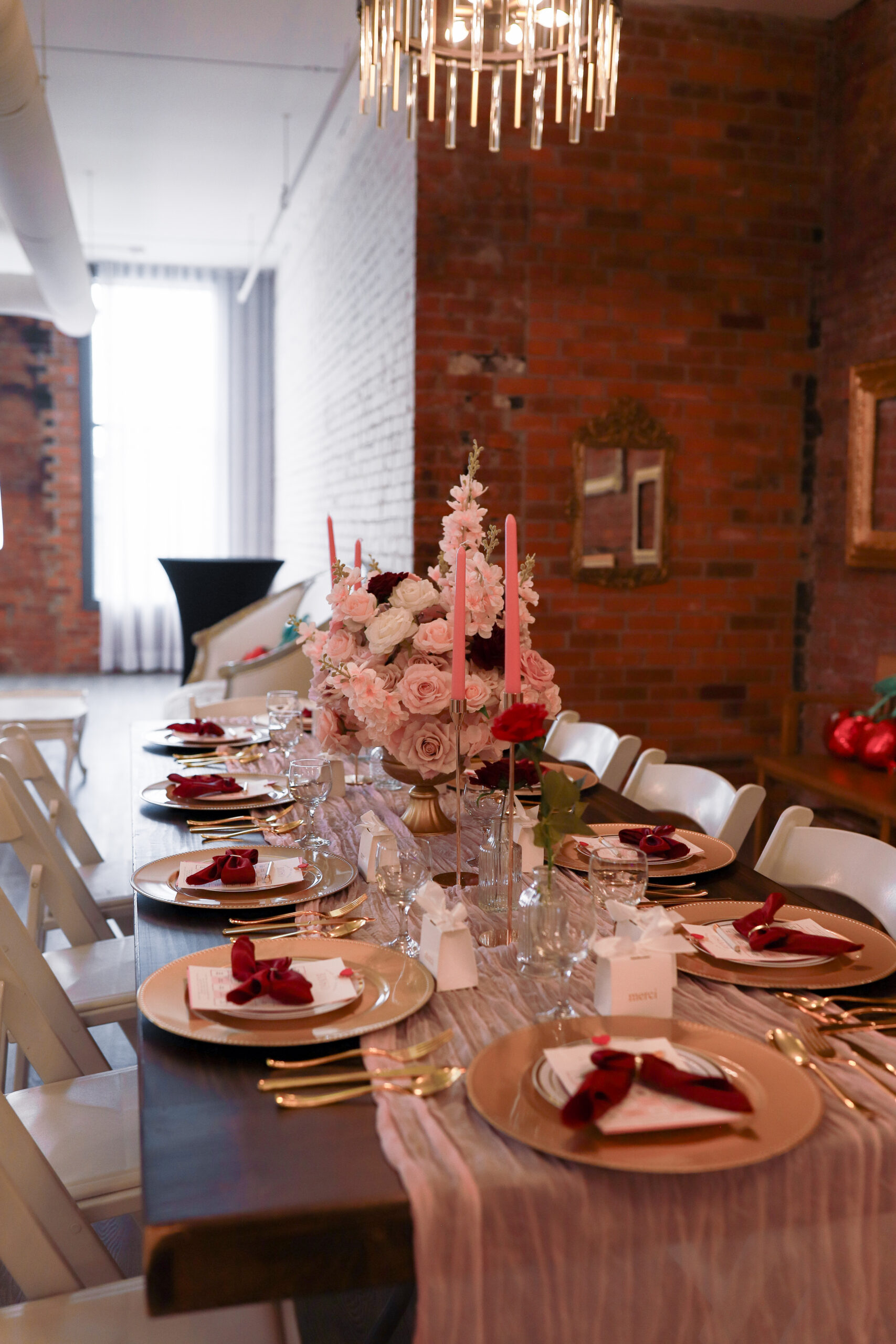
The output of experiential architecture can be permanent or temporary. It can be a festival pavilion that exists for three days or a retail environment that shapes the brand experience for a decade. It can be a 200-square-foot installation in a gallery or a 20,000-square-foot public space. The scale varies. The discipline does not. Every project asks the same question: what is the story this space tells, and how does the person inside it become part of that story?
This is what separates experiential architecture from decoration. Decoration adds layers to a space. Experiential architecture designs the space as a sequence of emotional moments. The architecture is not the backdrop. It is the performance.
The architecture is not the backdrop. It is the performance.
Why Calgary Is Ready for Experiential Architecture
Calgary is in the middle of a construction and cultural boom that has created unusually fertile conditions for experiential architecture. The city is building at a pace it has not seen in over a decade, and the nature of what is being built has changed. Developers are no longer competing on square footage alone. They are competing on experience. On placemaking. On the feeling of walking through a lobby, a courtyard, a retail promenade.
East Village is the most visible example. A neighbourhood that barely existed fifteen years ago is now home to some of the most architecturally ambitious projects in Western Canada. The Central Library by Snohetta set a new standard for what a public building could feel like in Calgary, and the ripple effect has been significant. Developers, BIAs, and city planners are asking harder questions about spatial experience than they were five years ago.
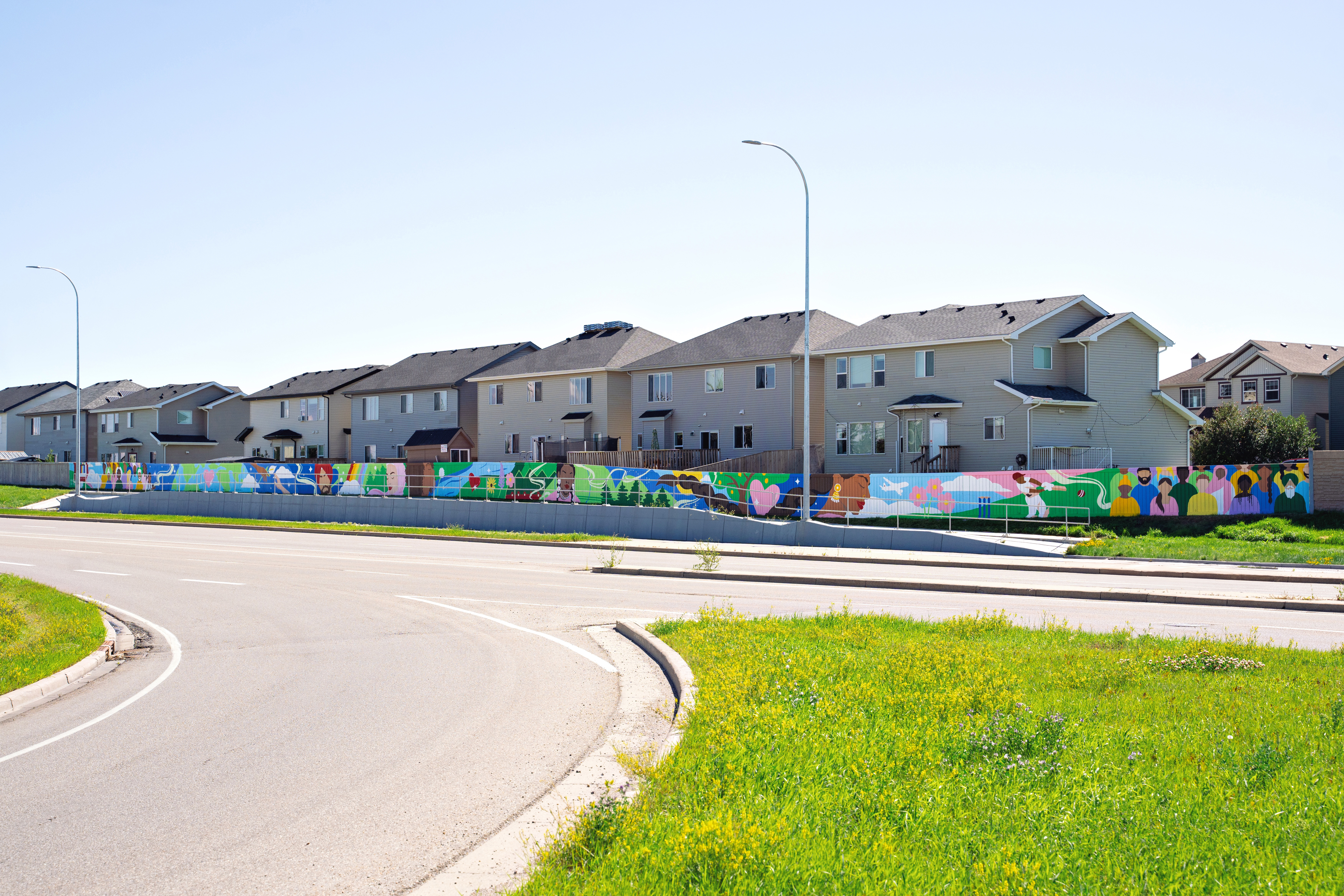
The Beltline and 17th Avenue are undergoing their own transformation, with new mixed-use developments, streetscape improvements, and a growing density of cultural programming that demands designed space. The Vibrance in Diversity mural project demonstrated how public art can reshape the spatial experience of a street. Spatial storytelling at events is becoming a language Calgary audiences understand and expect.
Then there is the festival culture. BUMP Festival has turned Calgary into one of Canada's most significant cities for temporary public art and spatial intervention. Beakerhead blends art, science, and engineering into built experiences that occupy city blocks. Stampede, for all its tradition, is one of the largest exercises in temporary architecture on the continent: a city-within-a-city that is built and dismantled every year. These festivals have trained Calgary audiences to expect that space can be designed to surprise, immerse, and transform.
The appetite is there. The construction activity is there. The cultural infrastructure is there. What has been missing is a language for the discipline that sits above all of it: the practice of designing space as experience, whether the project is a festival stage, a brand environment, a developer lobby, or a public plaza. That discipline is experiential architecture, and Calgary is one of the cities where it is being defined in real time.
Where Experiential Architecture Shows Up
Experiential architecture does not live in a single industry. It appears wherever someone needs a space to do more than function. Wherever the environment itself needs to communicate, persuade, immerse, or transform. In Calgary, it is showing up in five distinct contexts.
Set and Scenic Design for Fashion and Brand Events
Fashion shows and brand launch events are among the purest expressions of experiential architecture. The entire environment exists for a single purpose: to make the audience feel something specific for a concentrated period of time. The set is not decoration. It is the spatial argument for the brand's identity. PARKLUXE 2024, where KINN Studios designed the set and scenic environment, is a Calgary example: the architecture of the runway, the material palette, the spatial sequence from arrival to show to after-party, all designed as a single experiential narrative.
Festival Architecture and Temporary Structures
Festivals demand architecture that is buildable in days, experiential for hours, and removable without a trace. This constraint produces some of the most inventive spatial work anywhere. BUMP Festival commissions artists and designers to create temporary structures that reshape how people experience public space. Beakerhead builds kinetic environments where the architecture is interactive. These are not art installations placed in space. They are spatial experiences designed from the ground up.
Placemaking for Developers and BIAs
Business improvement areas and real estate developers are increasingly commissioning experiential work to differentiate their properties and streetscapes. Freeflow on 17th Avenue is one example: a project that used designed spatial intervention to change how people move through and experience a commercial corridor. For developers, the lobby, the courtyard, the rooftop amenity space are no longer afterthoughts. They are the competitive advantage. Experiential architecture is how that advantage is designed.
Immersive Brand Environments
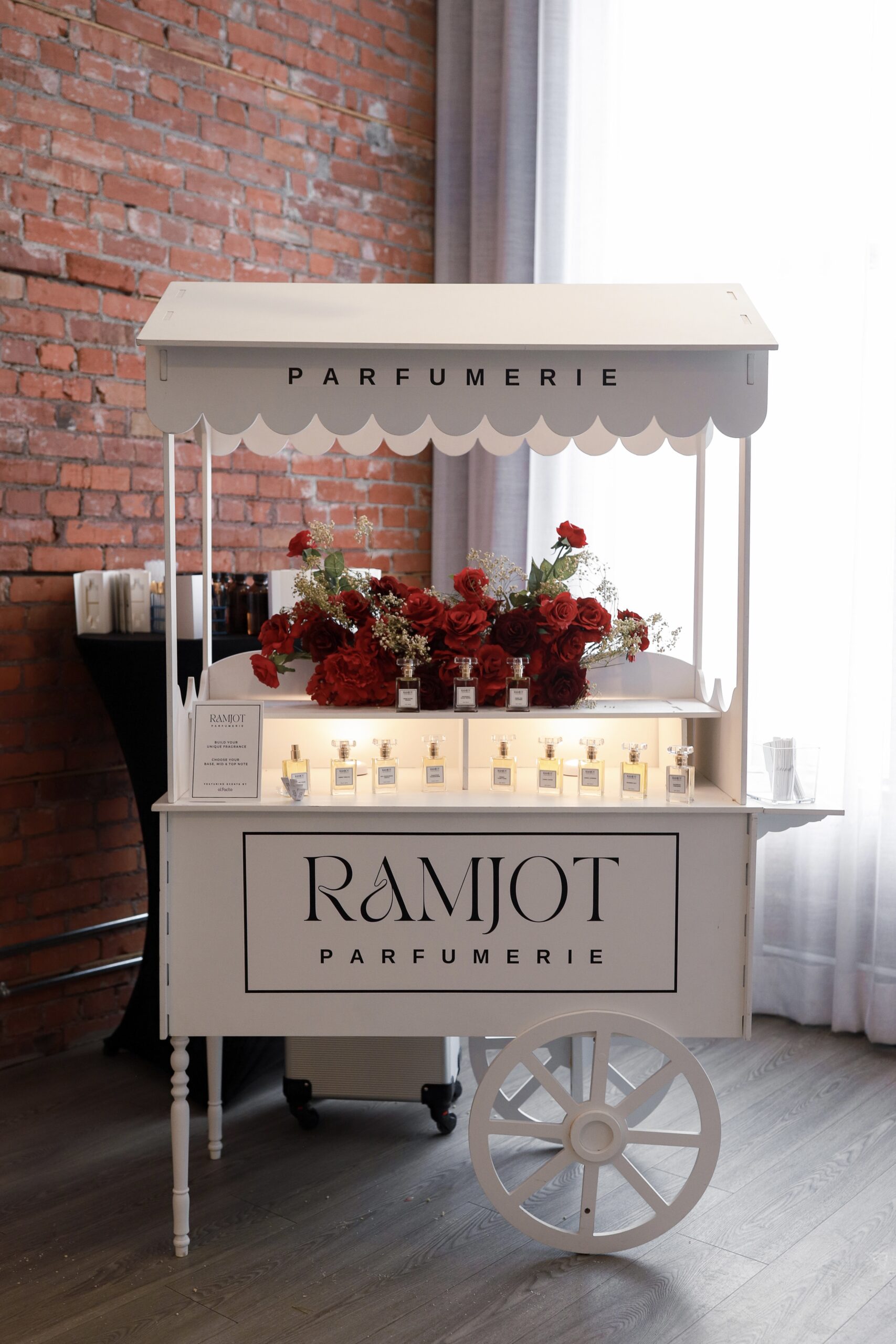
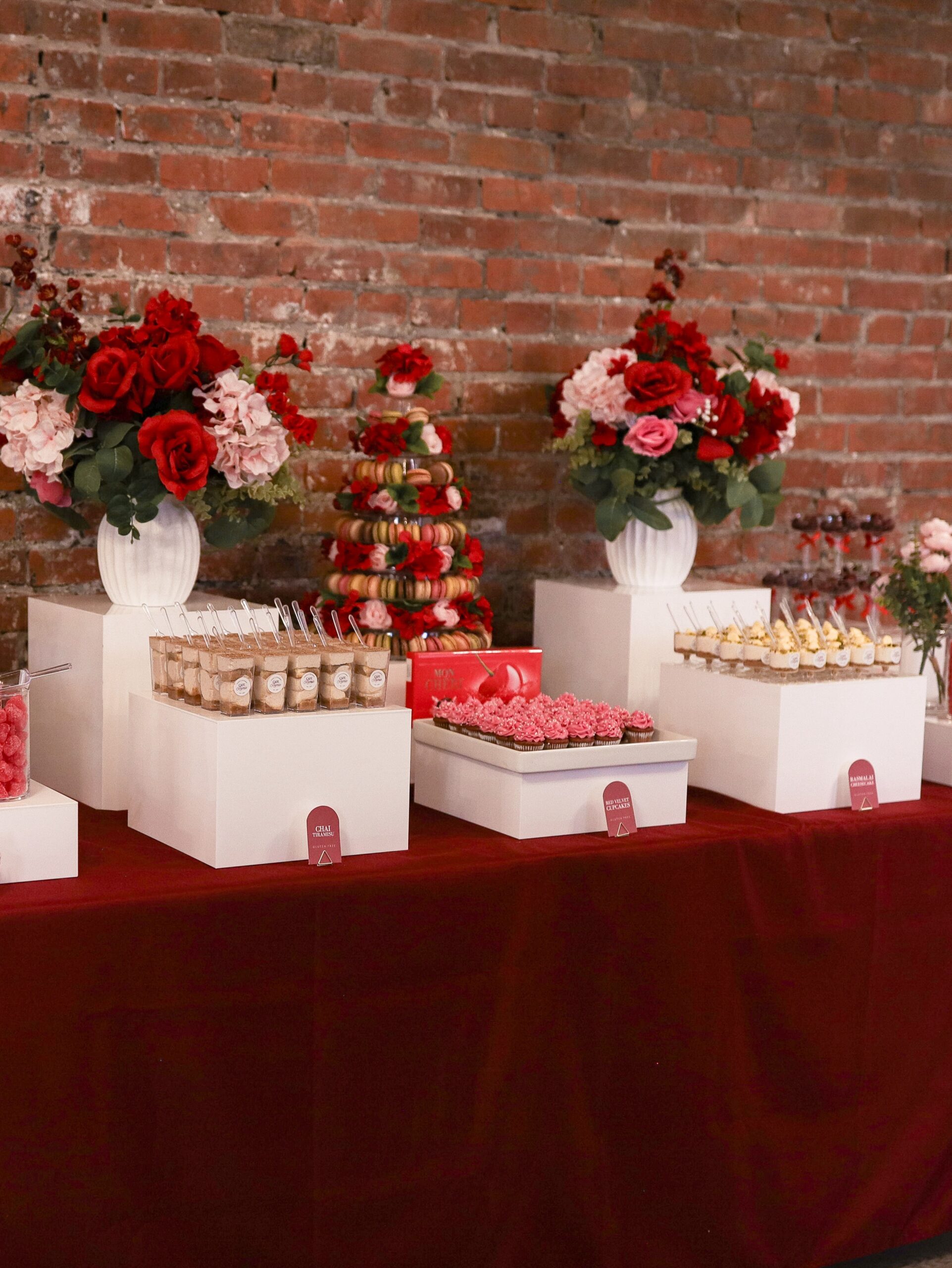
When a brand builds a physical environment, whether a pop-up, a showroom, a launch event, or a permanent retail space, the architecture communicates as much as the product. Ma Cherie, designed by KINN Studios, is a Calgary case study in this: a branded environment where the spatial design, the material choices, the lighting, and the sensory details worked together to immerse guests in the brand's world. The experiential design guide explores the principles behind this kind of work in more depth.
Public Art That Shapes Spatial Experience
The strongest public art does not just occupy space. It reorganizes it. It changes how people move, where they pause, what they notice. Vibrance in Diversity, produced by KINN Studios on 17th Avenue, is public art that functions as experiential architecture: it transforms the spatial experience of an entire block, changing the rhythm and character of the street for everyone who walks past it. This is the overlap where public art and architecture converge, and it is one of the most exciting spaces in Calgary's design landscape right now.
The Architecture Training Advantage
Experiential architecture is a design discipline, and like all design disciplines, the quality of the output depends on the training and thinking behind it. There is a meaningful difference between a designer who decorates a space and one who builds an environment from structural principles.
Architecture training, specifically a Master of Architecture degree and the rigorous spatial thinking it develops, provides three advantages that are difficult to replicate through other paths.
The first is structural thinking. An architect does not think about a wall as a surface to be decorated. They think about it as a structural element that defines space, controls light, directs movement, and creates acoustic conditions. When you approach experiential design with this mindset, every element in the environment has a job. Nothing is arbitrary. The ceiling height is not an accident. The material transition between two zones is not decorative. It is spatial punctuation.
The second is material specification. Architects are trained to specify materials at a level of detail that most other design disciplines do not reach. Not just what it looks like, but what it weighs, how it ages, how it is fabricated, how it is joined, what it costs at scale, and how it performs under load. This matters enormously in experiential architecture, where the materials people touch and move through are the primary medium.
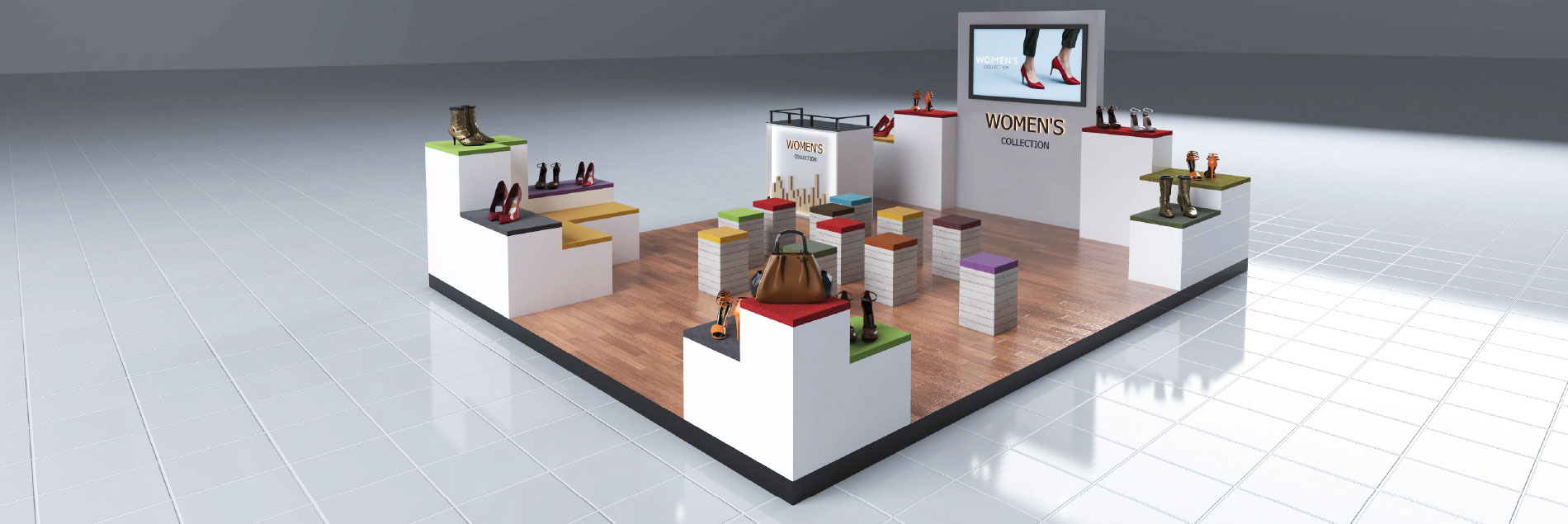
The third is construction documentation. Experiential architecture, unlike a mood board or a rendering, has to be built. Someone has to produce drawings that a fabricator can work from. Someone has to resolve the connection between a suspended installation and the ceiling structure it hangs from. Someone has to understand fire ratings, load paths, and egress requirements. Architecture training provides this, and it is the difference between a concept that looks beautiful in a render and one that actually gets built.
At KINN Studios, every experiential project is approached as an architectural problem first. The creative direction matters. The storytelling matters. The brand alignment matters. But the foundation is always spatial: how the environment is structured, how it is built, and how it performs as a three-dimensional experience. 3D spatial modelling is not a presentation trick. It is the primary design tool, used to test and refine the experience before a single material is ordered.
Experiential architecture begins where decoration ends. It designs the journey, not just the room.
Experiential Architecture vs. Event Design vs. Interior Design
These three disciplines overlap, and they are frequently confused. Understanding where each one begins and ends is important for anyone commissioning spatial work, because hiring the wrong discipline for the job produces the wrong result.
| Interior Design | Event Design | Experiential Architecture | |
|---|---|---|---|
| Primary focus | Surface, finish, furnishing | Logistics, flow, production | Spatial narrative, sensory journey |
| Starting point | The room as it exists | The event brief and guest count | The experience the space must create |
| Deliverables | Material boards, furniture plans, finish schedules | Floor plans, run sheets, vendor coordination | 3D spatial models, construction drawings, fabrication specs |
| Time horizon | Permanent or long-term | Single event or season | Temporary or permanent |
| Structural work | Rarely | Rarely | Always |
| Best for | Homes, offices, hospitality interiors | Conferences, galas, corporate events | Brand environments, installations, placemaking, immersive events |
Experiential architecture sits above both disciplines in the sense that it designs the spatial narrative that event designers and interior designers execute within. An interior designer makes a room beautiful. An event designer makes an evening run smoothly. An experiential architect designs the spatial story that both of those disciplines serve.
In practice, many projects need all three. A brand dinner might require an experiential architect to design the environment and spatial sequence, an event designer to manage production logistics, and an interior designer or stylist to handle the table setting and floral details. The disciplines are complementary. The mistake is assuming one can do the work of the others.
When should you hire an experiential architect specifically? When the space itself needs to tell a story. When you are building an environment from scratch rather than decorating an existing one. When the project requires fabrication, structural work, or construction documentation. When the experience matters as much as the aesthetics. When you need a 3D spatial model to test the concept before committing to build.
How to Commission Experiential Architecture in Calgary
If you are considering experiential architecture for a project in Calgary, whether it is a brand environment, a festival installation, a developer amenity, a public art commission, or an immersive event, here is what the process typically looks like.
Start with a Discovery Conversation
Every experiential architecture project begins with understanding the intent. Not the floor plan. Not the budget. The intent. What should people feel when they walk in? What should they remember when they leave? What is the story the space needs to tell? A strong discovery conversation surfaces these answers and begins to shape the spatial concept. Starting a conversation with KINN Studios is the first step.
3D Spatial Models Let You Walk Through the Experience Before It Is Built
One of the most significant advantages of working with an architecturally trained experiential designer is the ability to model the experience in three dimensions before anything is fabricated. You are not approving a mood board. You are walking through a spatial model, seeing the sightlines, understanding the material palette, experiencing the scale and proportions. This eliminates the most costly kind of risk in experiential work: building something that does not feel the way it was supposed to.
Timeline and Budget
Experiential architecture projects in Calgary typically require 8 to 16 weeks from concept to realization, depending on the scale, the complexity of fabrication, and whether the project is temporary or permanent. Intimate installations can move faster. Large-scale public projects with permitting requirements take longer.
Budget ranges are broad because the discipline is broad. A focused brand installation might begin at $5,000. A festival pavilion or large-scale brand environment typically falls in the $15,000 to $75,000 range. Major public art commissions and developer placemaking projects can reach $250,000 or more. The common denominator is that the investment is in the experience, not in the materials alone. The design thinking is where the value is created.
If you are planning a project that requires space to do more than function, if you need an environment that tells a story, creates an emotion, or transforms how people experience a place, experiential architecture is the discipline, and Calgary is ready for it. Explore the full range of experiential design services at KINN Studios, or reach out to start a conversation about your project.