There is a question that sits underneath every restaurant opening, every retail build-out, every wedding, every brand pop-up, every public mural in Calgary right now: what do we want people to feel when they walk in?
Not what do we want them to buy. Not what do we want them to see. What do we want them to feel.
That question is the dividing line between spaces that function and spaces that matter. Between a restaurant that serves food and a restaurant that becomes a destination. Between a retail store and a place people drive across the city to visit. Between a wedding and a story people tell for years. The spaces that win in 2026 are the ones designed to move people. And the discipline that designs those spaces has a name: experiential design.
At KINN Studios, experiential design is not one thing we do. It is everything we do. Restaurants. Retail. Weddings. Brand activations. Public art. Corporate environments. Set design. Every project starts with the same question, and every project is designed with architecture-trained spatial thinking, artist-led aesthetics, and the understanding that the way a space makes someone feel is not an accident. It is a design decision.
This is a map of every type of designed experience we create in Calgary, and why the city is ready for all of them.
Calgary Is Becoming an Experience City
For decades, Calgary's identity was defined by what came out of the ground. Oil. Gas. The commodities that built the downtown towers and funded the suburban sprawl. The creative economy existed, but it lived in the margins. Artists worked in warehouses east of Macleod Trail. Designers freelanced between oil company contracts. The restaurants that got attention were steakhouses and chains.
That Calgary is gone. Or rather, it is being overwritten by something more interesting.
The East Village redevelopment brought the National Music Centre, the Central Library, and a generation of architects and designers who proved that Calgary could build things that mattered beyond function. The Beltline became a density experiment where restaurants, galleries, and boutiques competed not on price but on atmosphere. Kensington and Bridgeland matured into neighbourhoods where the question was no longer "what can we build here?" but "what should this place feel like?"
Developers figured it out first. The ones selling condos in the Beltline started commissioning murals for their lobbies. The ones building mixed-use in Inglewood started curating the retail tenants like gallery exhibitions. Then the restaurants caught on. Then the retailers. Then the brands. Now everyone is competing on experience.
The coffee shop that just serves coffee loses to the one with the designed interior. The salon that just cuts hair loses to the one that feels like a boutique. The wedding that just follows tradition loses to the one that reinvents it. The brand that just buys ads loses to the one that builds a physical experience people want to be inside of.
This is the experience economy arriving in Calgary. Not as theory. As competitive reality. And it is creating a massive demand for the kind of design that most studios in this city are not equipped to deliver, because it requires someone who thinks about space, story, and feeling simultaneously. Someone trained in architecture but practising as an artist. Someone who can design a 100-metre public mural and a 20-person bridal shower with the same rigour.
The spaces that win are the ones that make people feel something. That is not luck. It is design.
Artist-Designed Restaurants and Cafes
The restaurant industry in Calgary has undergone a quiet revolution. The food got better first. Then the cocktail programs. Then the plating. But the thing that separates the restaurants people talk about from the restaurants people forget is increasingly not on the plate. It is on the walls. In the lighting. In the way the room feels when you walk through the door.
Artist-designed restaurants are not a trend. They are the new baseline. The restaurants that become destinations in 2026 are the ones that treat their interior environment with the same seriousness as their menu. A commissioned mural is not decoration. It is the restaurant telling you who it is before you read a single word on the menu.
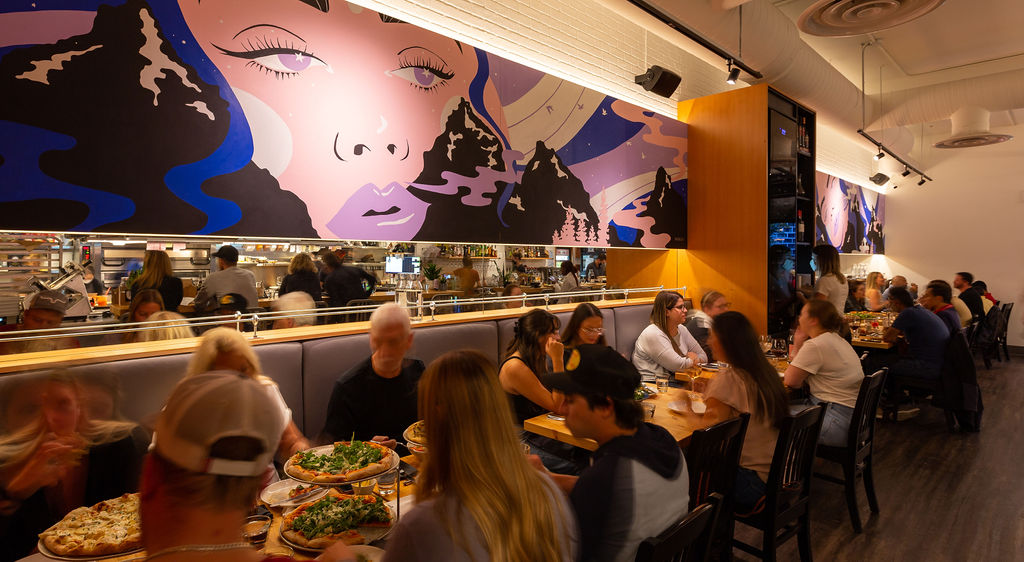
KINN Studios designed Uprooted at UNA Pizza + Wine in Bridgeland. It is a mural about cultural displacement — the experience of leaving home, carrying your roots, and growing in a new place. It hangs in a pizza restaurant, and that is entirely the point. The mural gives the room gravity. It gives diners something to look at, something to photograph, something to talk about, something to come back for. It transforms a meal into a moment. The restaurant did not commission a painting. They commissioned an experience.
Customers photograph it. They share it. They tag the restaurant and the artist. The mural becomes a recurring piece of organic marketing that costs nothing after the initial investment. More importantly, it becomes part of the restaurant's identity. UNA Bridgeland is not just a pizza place in a growing neighbourhood. It is the restaurant with that mural. That distinction is worth more than any ad budget.
Any restaurant can serve great food. The ones that become destinations design the entire experience — from the wall art to the table layout to the lighting. KINN has brought this approach to brewery murals, cafe interiors, and food hall concepts across Calgary, because the principle is always the same: the environment is part of the product.
For more on how this works in practice, read our guides on restaurant interior design in Calgary and brewery and restaurant murals.
Retail Stores as Galleries
Retail is dying. That is the headline, and it is mostly true — for retail spaces that offer nothing except product on shelves. The stores that are thriving, the ones pulling people away from their screens and into physical space, are the ones designed as experiences. Galleries. Environments. Places where the act of shopping feels like visiting somewhere worth being.
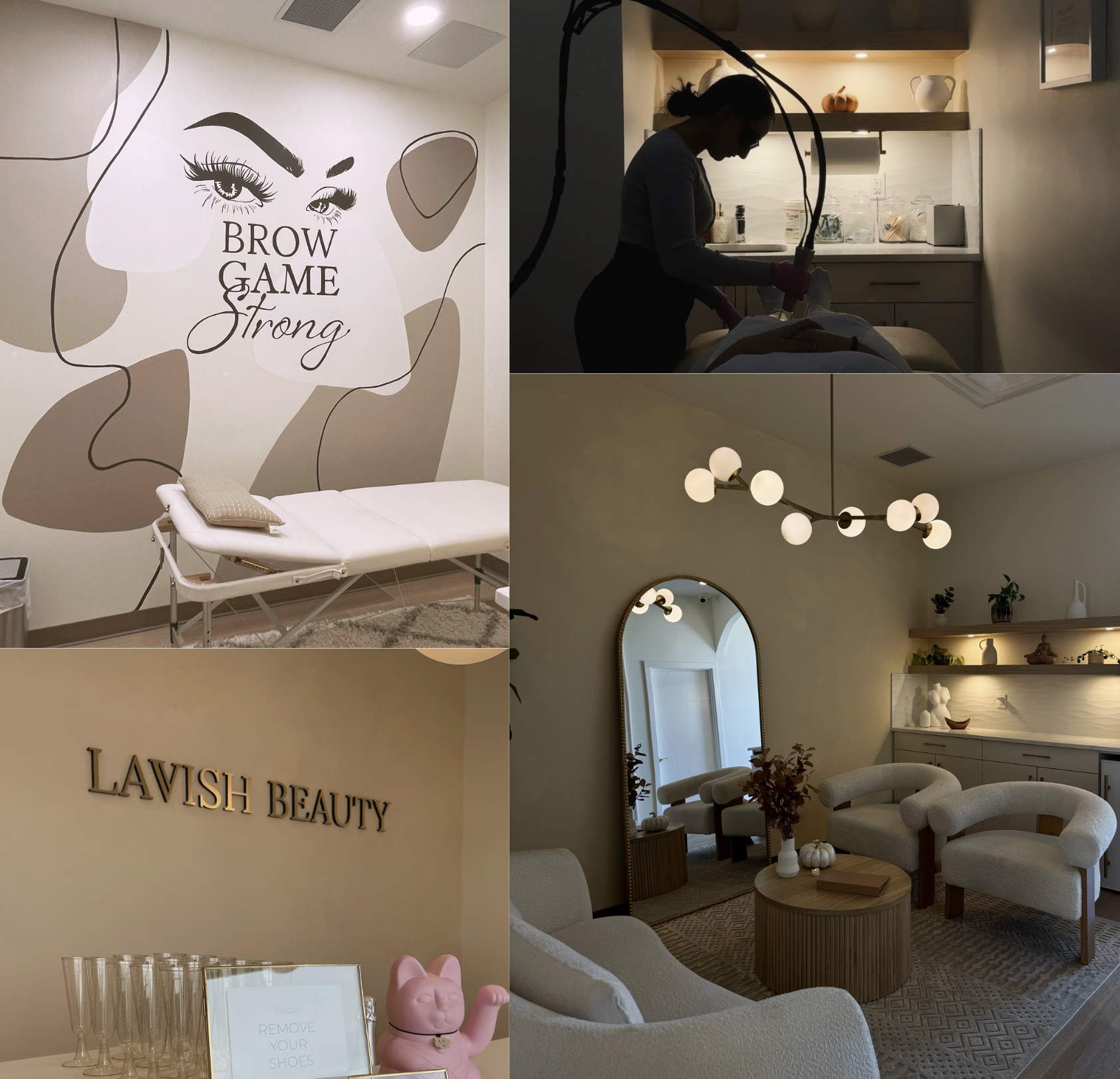
KINN designed the interior of Lavish Beauty Lounge in Cornerstone as a boutique experience, not a salon. The design language borrows from luxury retail and gallery curation: considered lighting, intentional material choices, spatial flow that makes clients feel like guests in a private space rather than customers in a strip mall unit. The result is a business that photographs beautifully, that clients share without being asked, and that commands premium pricing because the environment communicates premium quality.
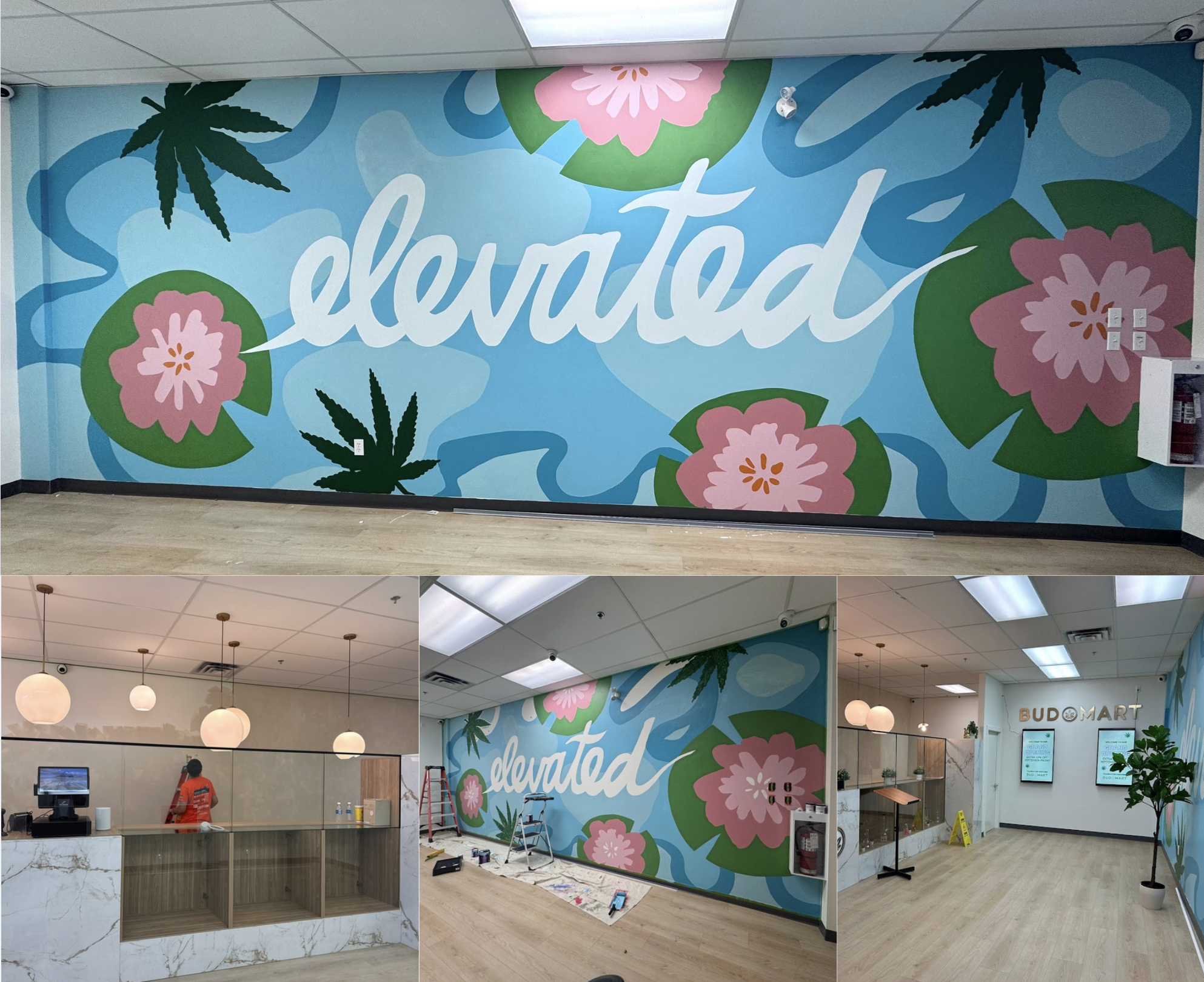
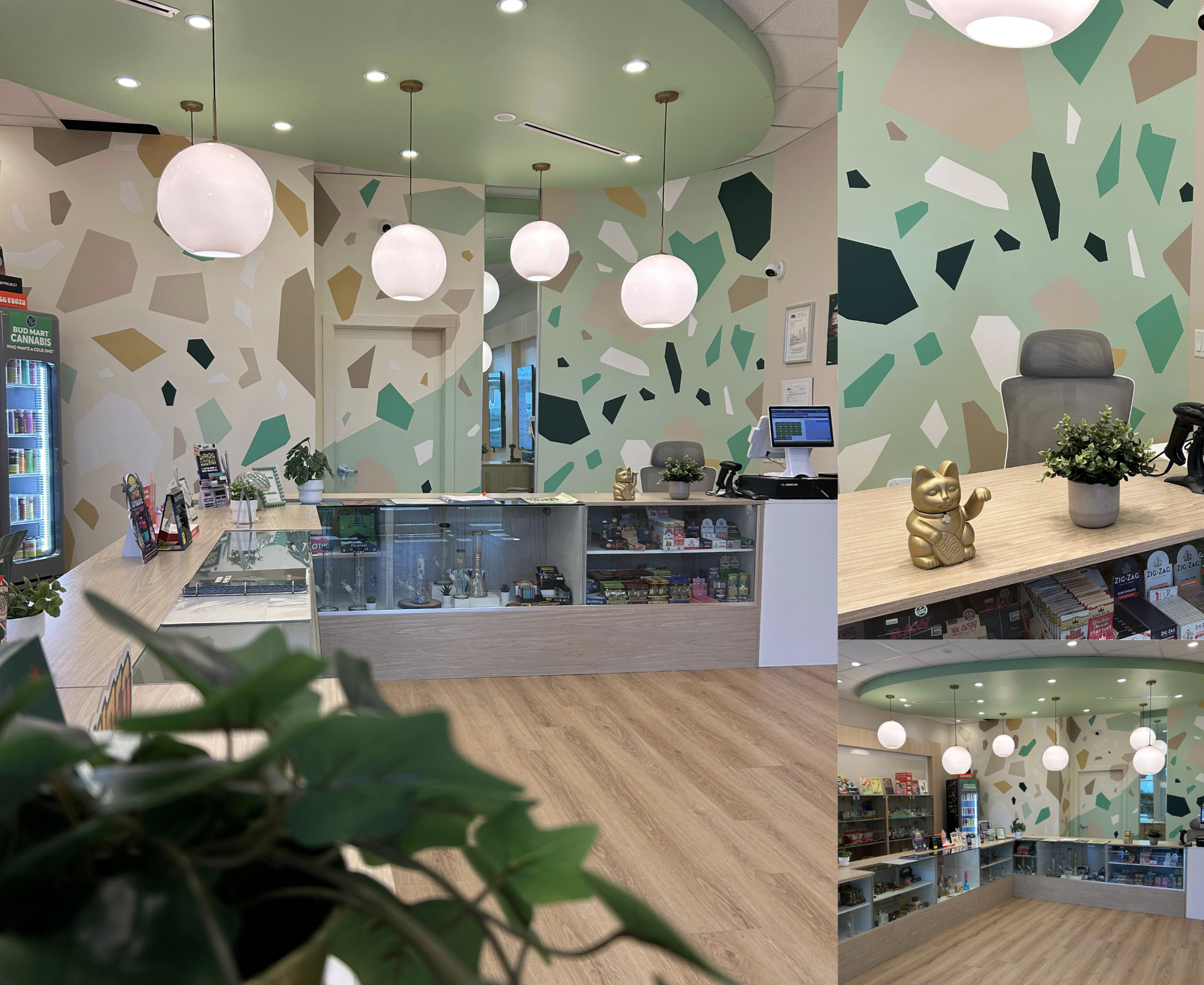
The cannabis retail sector in Calgary is another case study. Most dispensaries followed the same playbook: white walls, glass display cases, clinical lighting. It communicates "legal" but not "worth visiting." KINN's approach to cannabis retail flipped the script — warm wood, arch cabinets, designed lighting, and a spatial layout that feels more like a curated shop than a regulated storefront. The product is the same. The experience is entirely different. And the experience is what brings people back.
The thesis is simple: physical retail survives only when it becomes an experience. Pop-up retail takes this further — a temporary space that exists solely to create a moment, generate content, and build brand affinity. Window displays, when designed well, turn storefronts into street-level art that draws foot traffic from a block away. These are not peripheral concerns. They are the survival strategy for brick-and-mortar in an Amazon world.
Read more in our guides on pop-up activations and window display design in Calgary.
Bespoke Weddings and Private Celebrations
The wedding industry talks about styling. KINN talks about architecture.
The difference between a styled event and a designed experience is the same difference between putting furniture in a room and designing the room itself. Styling starts with Pinterest boards and tablescapes. Design starts with the space: how people enter, what they see first, how they move through the environment, what they encounter at each moment, and what they carry with them when they leave.
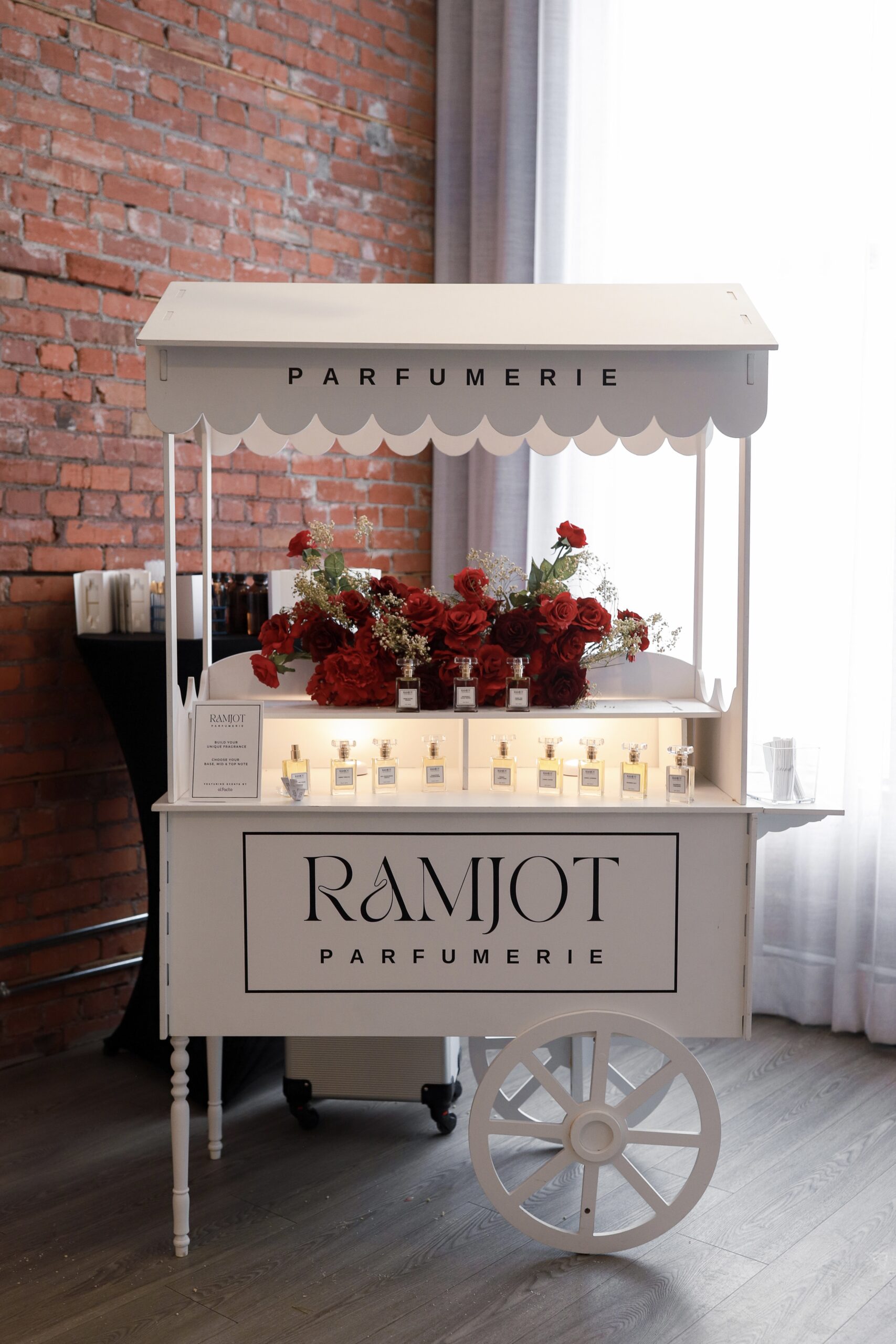
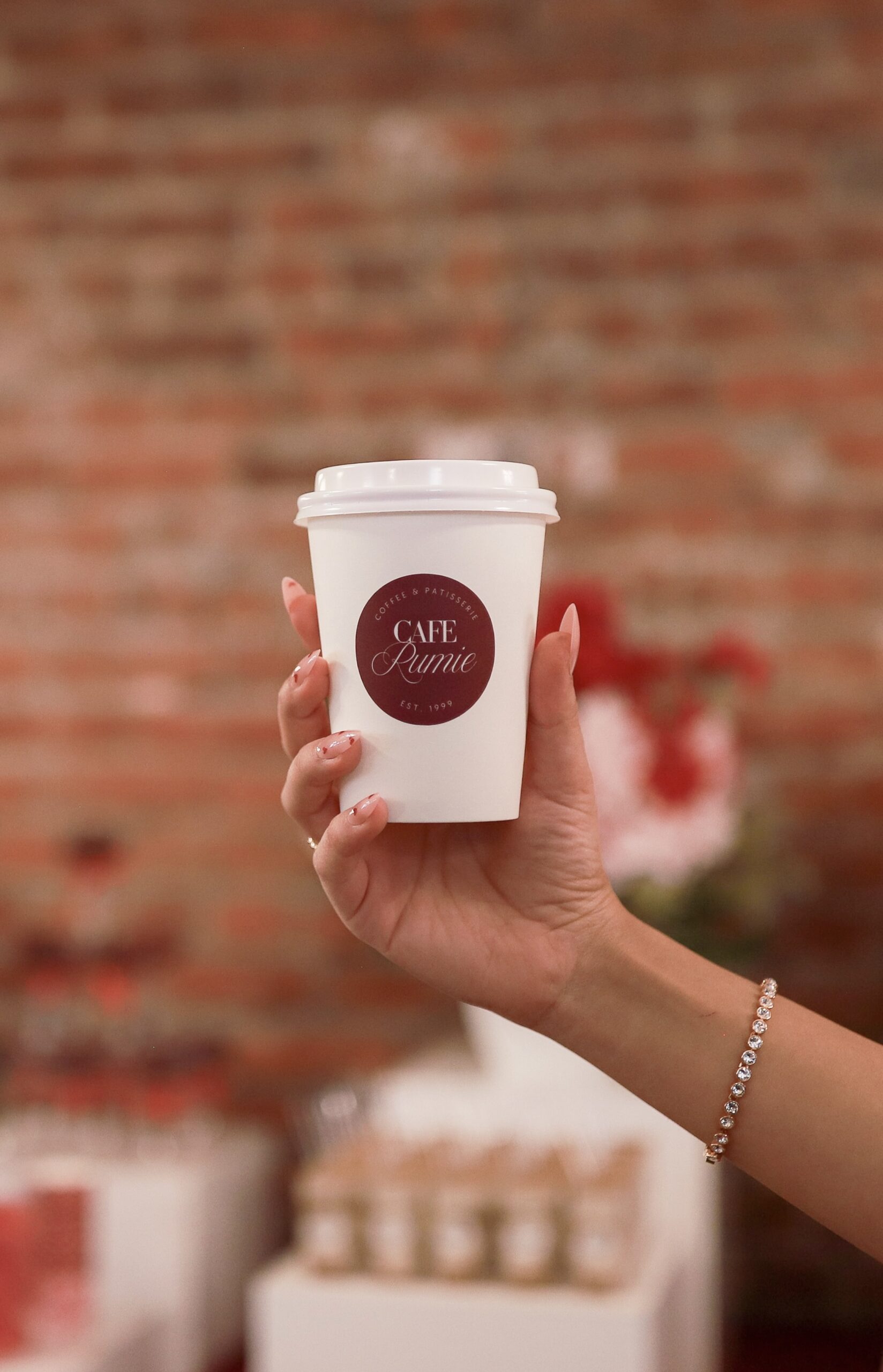
Ma Cherie was a bridal shower at Venue 308. KINN designed a custom perfume cart as the centrepiece, paired with curated florals and a colour palette drawn from the bride's South Asian heritage. The perfume cart was not a prop. It was an experience station — a moment in the event where guests encountered something unexpected, something personal, something designed specifically for this celebration and no other. Custom-branded coffee cups. A dessert table designed as a visual composition, not just a buffet. A backdrop that existed as a spatial element, not a photo wall.
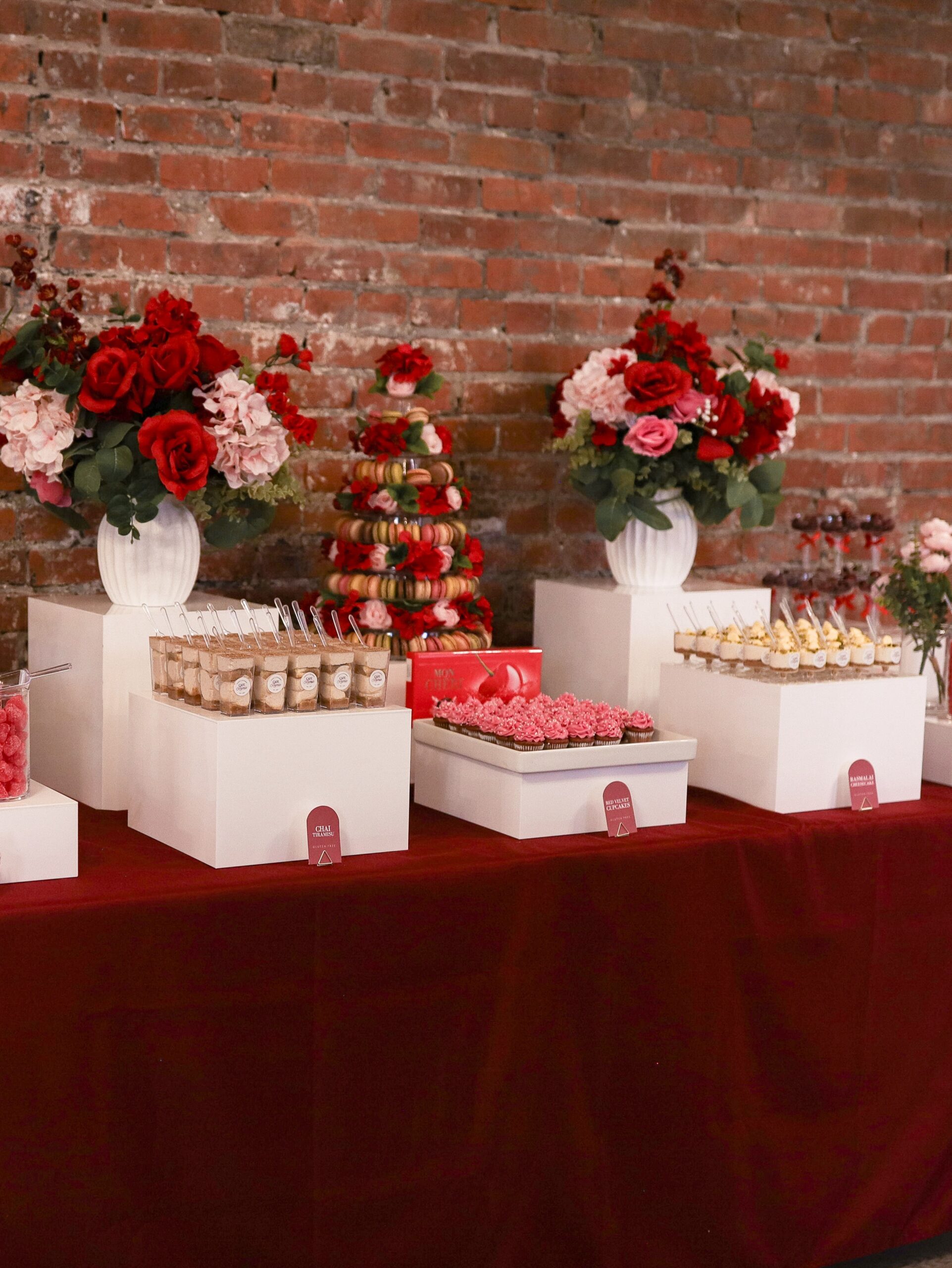
South Asian weddings are a particular strength. The challenge is honouring deep cultural traditions while creating a contemporary design language that feels personal to the couple, not generic to the culture. The mehndi should feel different from the sangeet. The baraat should feel different from the reception. Each event within the wedding becomes its own designed experience, with its own colour story, spatial concept, and emotional arc.
Milestone celebrations — birthdays, anniversaries, retirement dinners — benefit from the same thinking. A fiftieth birthday should not look like a wedding that ran out of budget. It should look like someone thought about what this person's life has meant and designed a room that reflects it. That is what architecture-trained event design delivers.
Explore our approach to bespoke event design and read about South Asian wedding design in Calgary.
The difference between a styled event and a designed experience is architecture. We think about how people move through the space, what they encounter at each moment, what they take with them.
Brand Activations and Pop-Ups
Brands are drowning in digital noise. Every feed is saturated. Every ad is skippable. Every influencer post blurs into the next. The brands that are cutting through in 2026 are the ones building physical experiences that people choose to walk into, choose to photograph, and choose to share — not because they were paid to, but because the experience was worth sharing.
Product launches need environments. Sampling events need spatial design. Influencer activations need backdrops that are more than a logo wall. Brand dinners, masterclasses, wellness activations — every one of these formats lives or dies on the quality of the designed environment. And the environment is what KINN builds.
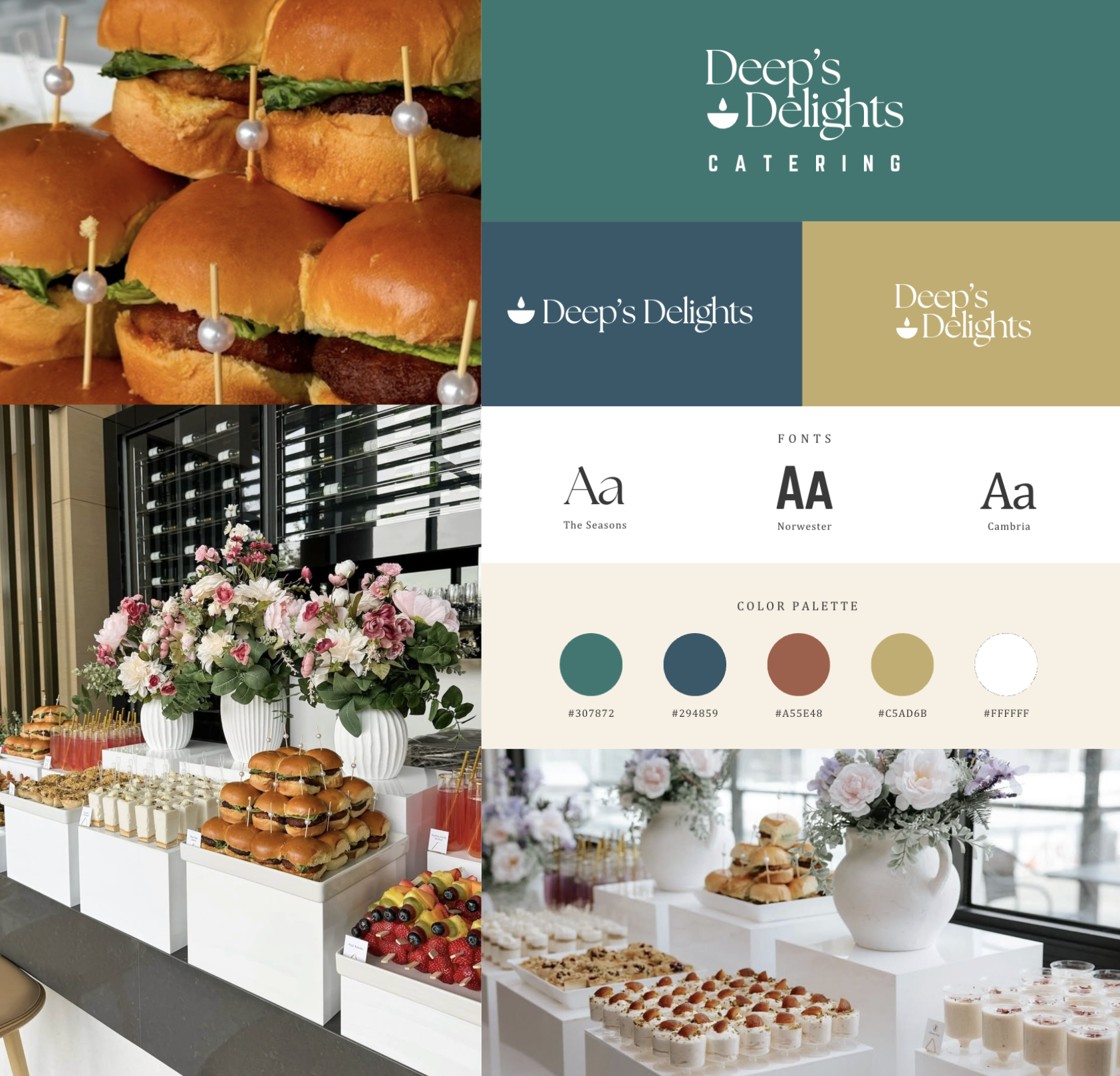
Deep's Delights is a case study in what happens when a brand is designed from the inside out. KINN created the brand identity, the event styling system, and the experiential catering setups. The result is not a catering company with a logo. It is a brand experience — one that looks and feels cohesive whether you encounter it at a private dinner, a corporate event, or on Instagram. The food is exceptional, but the brand's power comes from the designed environment that surrounds it.
Calgary Stampede represents the biggest annual opportunity for brand experiences in the city. For ten days in July, the entire city becomes a stage. The brands that invest in designed activations — not just tents with banners, but spatial environments that stop people mid-stride — are the ones that dominate the conversation. KINN brings the same design rigour to a Stampede activation as to a gallery installation, because the principles are identical: control the space, control the feeling, control the story.
Explore our experiential design services and read more about brand activations in Calgary.
Public Art and Placemaking
Public art is not beautification. It is placemaking. It gives neighbourhoods identity. It creates gathering points. It turns a stretch of concrete into somewhere people want to be. And in Calgary, it is transforming entire communities.
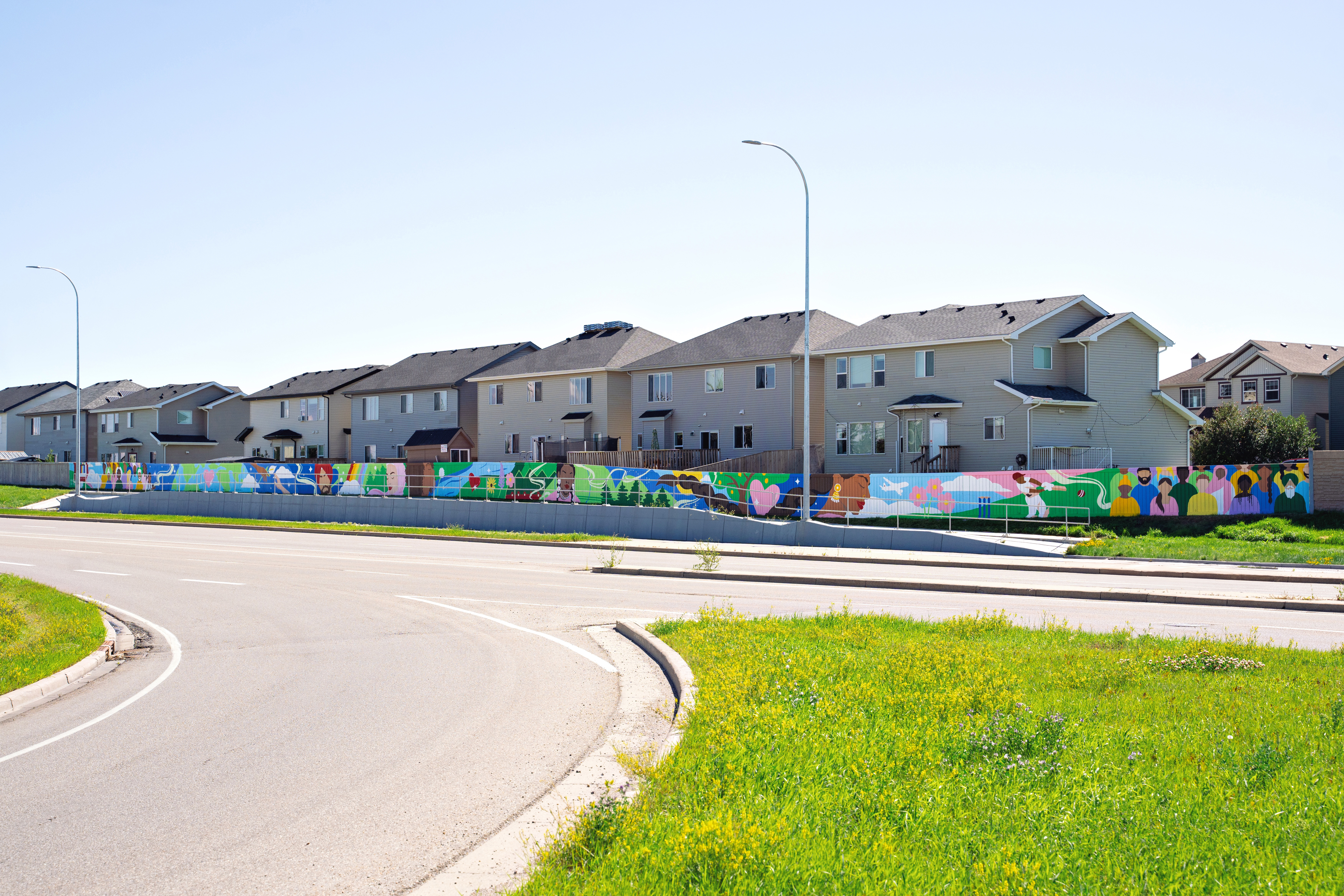
Vibrance in Diversity is a 100-metre community mural in NE Calgary, co-created by KINN Studios and Indigenous artist Kristy North-Peigan. It is not a painting on a wall. It is a placemaking intervention — a designed experience that gives an entire neighbourhood a visual identity, a gathering point, a landmark. Community members participated in the painting process. Children see themselves in the imagery. The mural does what great public art always does: it tells people they belong here.
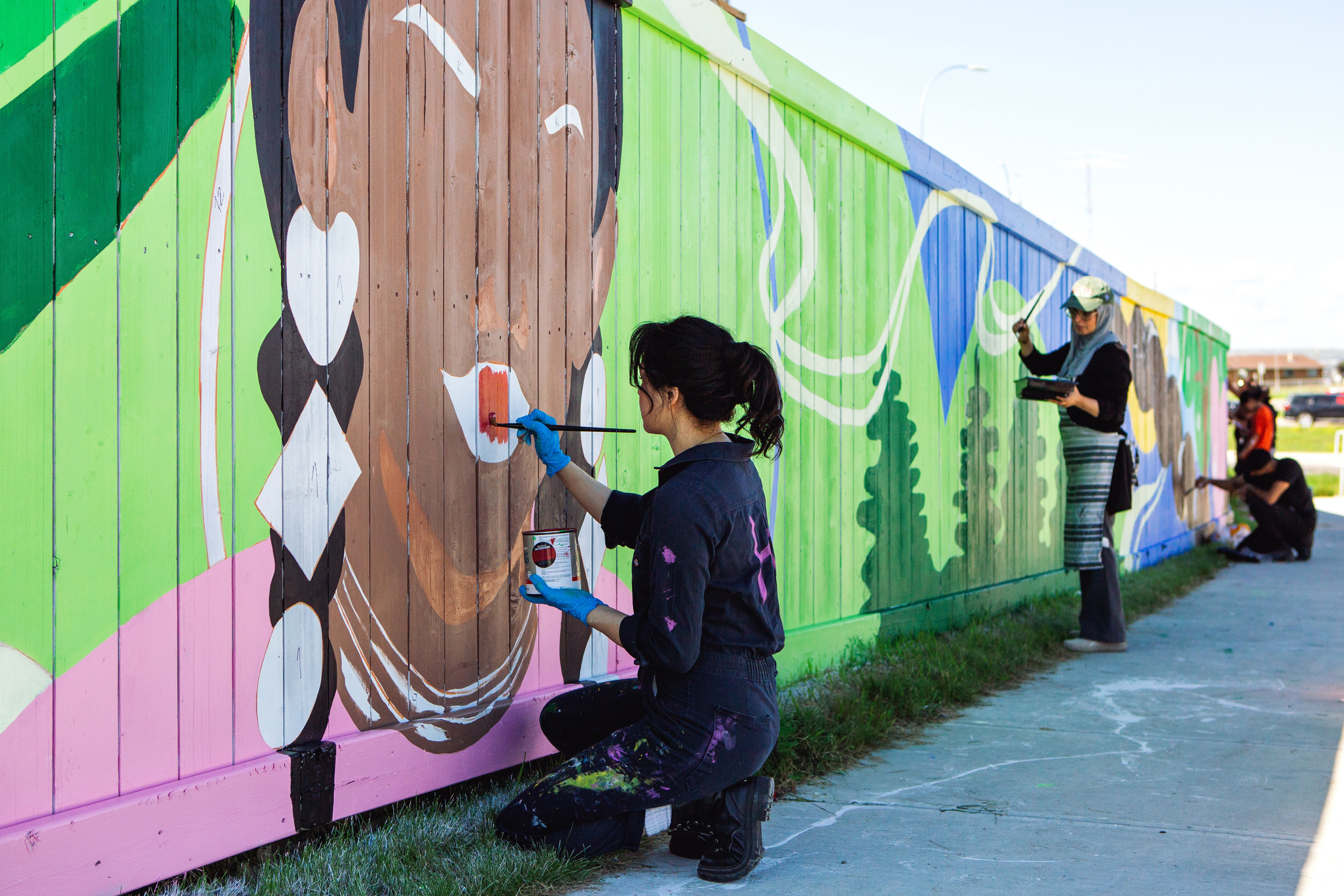
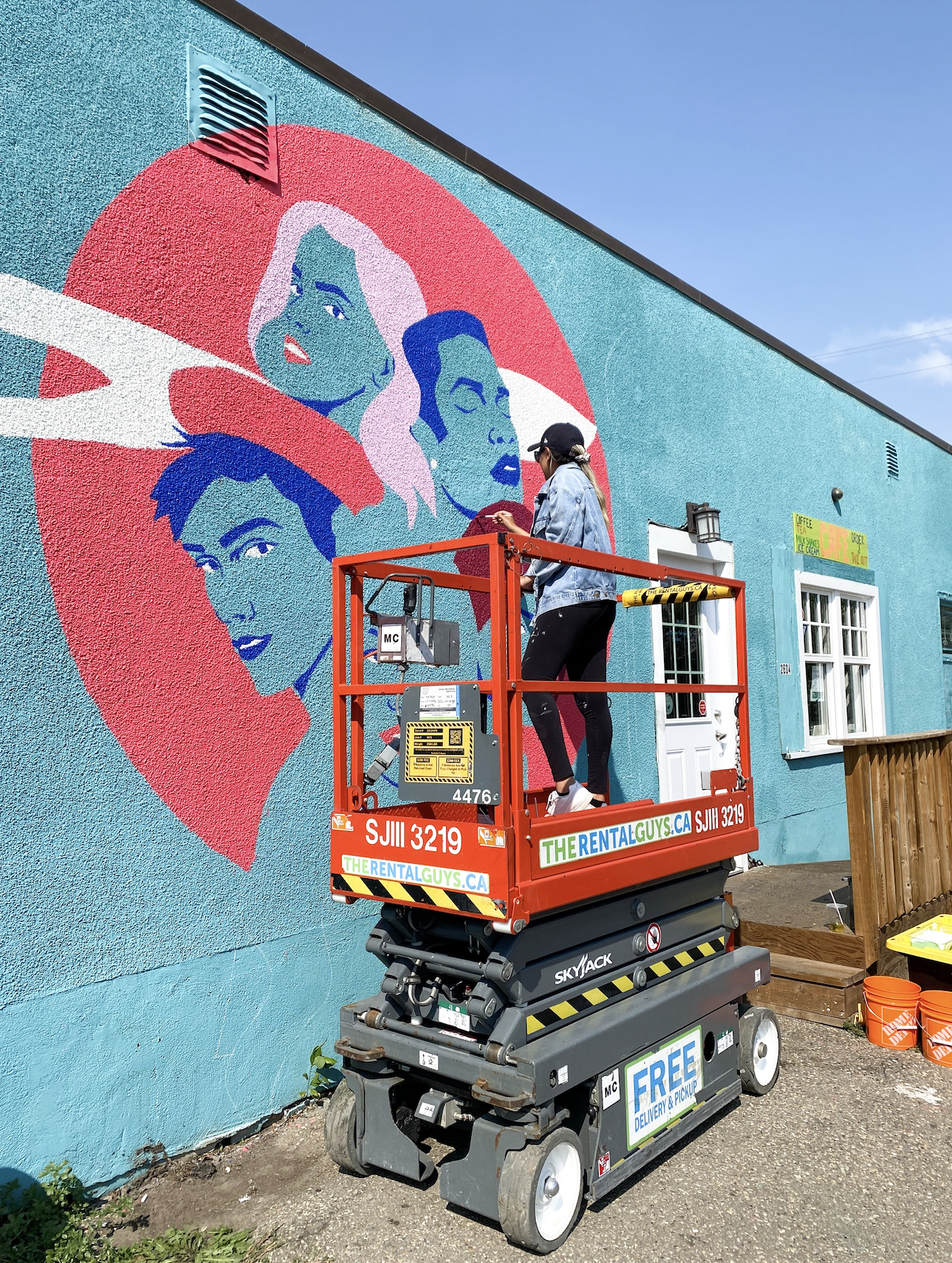
SAWA brought the same approach to NW Calgary — a community mural that transformed a blank wall into a landmark. Freeflow was a temporary installation on 17th Avenue that turned a stretch of streetscape into an interactive moment. Different scales, different formats, same principle: designed space creates designed experience.
Developers and Business Improvement Areas across Calgary are increasingly using public art to build community identity and drive foot traffic. A mural on a new development is not an afterthought. It is a strategic investment in placemaking — in making a neighbourhood feel like somewhere, not just anywhere. The developers who understand this are the ones building communities that thrive.
Read our deep dives on art installations and placemaking in Calgary.
Corporate Environments and Set Design
PARKLUXE 2024 at The Ampersand was a fashion show. KINN designed the set. Not the outfits. Not the music. The physical environment that the models walked through, the audience sat inside, and the cameras captured from every angle. Set design at this level is spatial storytelling — designing a three-dimensional environment that exists for hours or days but creates imagery that lives permanently.
Corporate environments are the quieter version of the same discipline. The companies competing for top talent in Calgary are no longer relying on ping-pong tables and free snacks. They are commissioning art for their offices. They are designing reception areas that communicate brand values before anyone says a word. They are investing in environments that make employees want to be in the building, because in a remote-work world, the office has to earn the commute. The office, like the restaurant and the retail store, has to become an experience.
Set and scenic design extends to brand events, conferences, galas, and award shows. Any live event where the physical environment matters — which is every live event — benefits from the same spatial thinking that designs a mural or a restaurant interior. The medium changes. The discipline does not.
Learn more about our experiential architecture approach and read our guide to set design in Calgary.
Why Architecture Training Changes Everything
Most designers start with a mood board. KINN starts with the space.
Kiran Rai-Bhullar holds a Master of Architecture degree. That is not a credential displayed on a shelf. It is the foundation of every project KINN delivers. Architecture training means thinking in three dimensions before thinking in colours. It means understanding how people move through space — how sight lines create hierarchy, how materials create mood, how scale creates emotion, how light transforms everything. It means designing the experience of being in a room, not just what the room looks like in a photograph.
This shows up in practice as 3D spatial models. Before anything is built, before any paint is mixed, before any fabric is ordered, KINN's clients walk through their project digitally. They see the mural on the wall at scale. They see the event space from the guest's perspective. They see the retail interior with the lighting and the fixtures and the flow. They see problems before they become expensive. They see opportunities before they are missed. This is not a nice-to-have. It is the difference between a design that works in theory and a design that works in reality.
The other dimension is artistry. KINN is not an architecture firm that happens to do creative work. It is an artist-led studio that applies architectural thinking to creative work. The murals are painted by hand. The event concepts are original compositions, not template arrangements. The brand identities are designed with the same intentionality as the spatial environments. Architecture provides the structure. Art provides the soul. The combination is what makes a KINN project feel different from everything else in Calgary.
This is what makes KINN Calgary's only architecture-trained experiential design studio. Not because other studios do not do good work. Because the combination — M.Arch spatial thinking, fine art practice, experiential design across every format from public murals to private celebrations — does not exist anywhere else in this city.
We do not decorate spaces. We design experiences.
Every Space Deserves to Be an Experience
This is the thread that connects a 100-metre public mural to a 20-person bridal shower. A restaurant wall to a fashion show runway. A cannabis dispensary to a brand activation at Stampede. A corporate lobby to a wedding mehndi. The thread is this: every space where people gather is an opportunity to make them feel something. And making people feel something through the design of physical space is the most powerful, most underutilized tool available to every business, brand, developer, and individual in Calgary right now.
The restaurant owner who commissions a mural is not buying art. They are buying an experience that makes their restaurant a destination. The brand manager who invests in an activation is not buying a booth. They are buying a physical encounter that no digital ad can replicate. The couple who hires a designer for their wedding is not buying decor. They are buying the feeling their guests will talk about for years. The developer who commissions public art is not buying beautification. They are buying community identity.
Every one of these decisions starts with the same question: what do we want people to feel in this space?
KINN Studios exists to answer that question. Across every format. At every scale. With the spatial rigour of architecture training and the emotional depth of an artist's practice. From restaurants to runways. From gallery walls to city walls. From intimate celebrations to public landmarks.
Whether it is a restaurant wall, a retail store, a wedding, a brand pop-up, or a 100-metre public mural — the spaces that matter are the ones designed to move people. That has always been true. What is new is that Calgary is finally ready to demand it everywhere.
If you have a space that deserves to be an experience, let's talk.