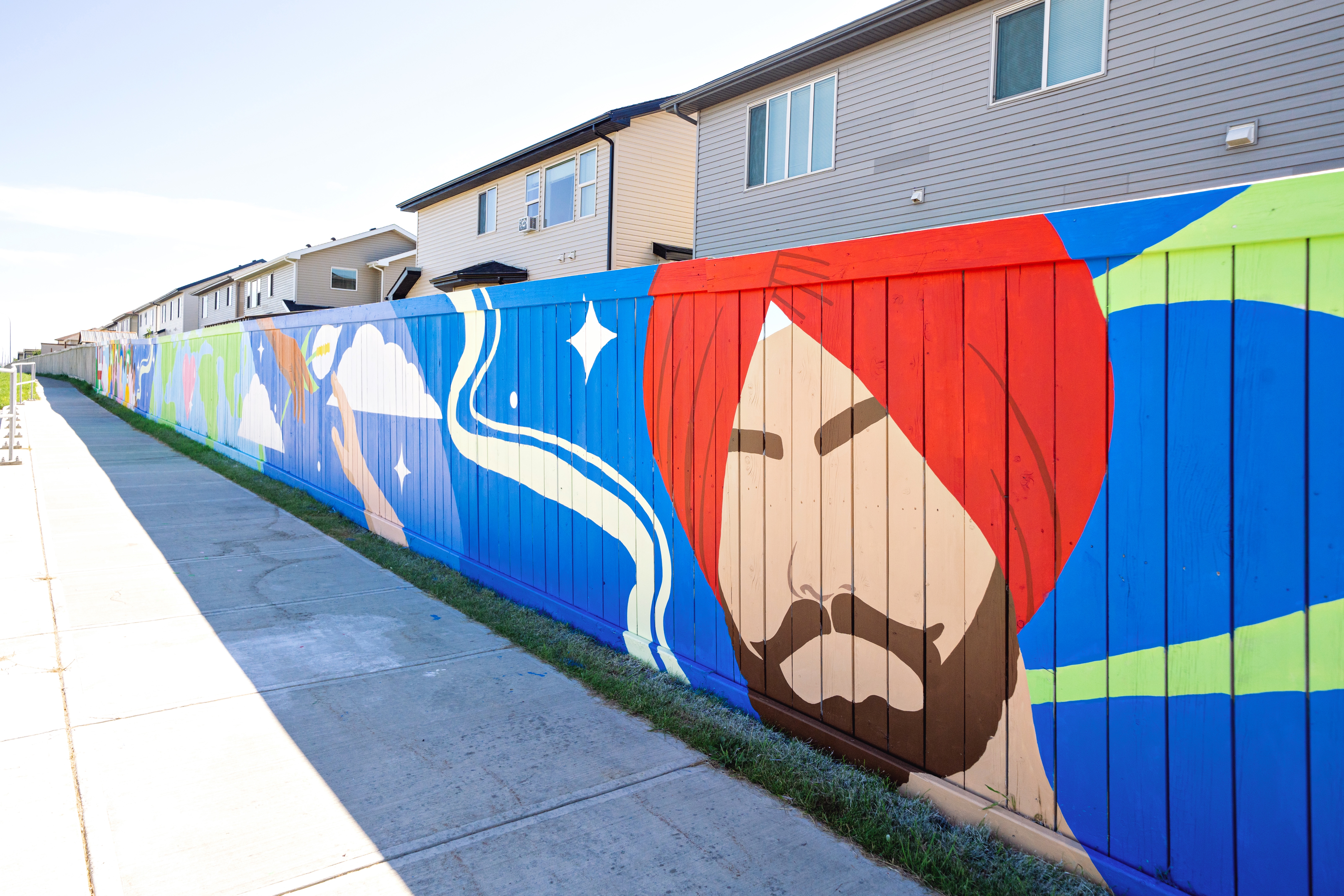
A mural is not a static object. From the moment the final coat of protective varnish cures, it enters into a relationship with its environment, one that, in Calgary, is defined by extremes. The city's continental climate delivers UV radiation at altitude, freeze-thaw cycles that number in the dozens each season, chinook winds that swing temperatures by twenty degrees in hours, hail, driving rain, and months of snow accumulation against vertical surfaces. Every one of these forces acts on a painted mural, and managing them is what separates a ten-year artwork from a thirty-year one.
This guide is drawn from our experience maintaining murals across Calgary. It is structured as a seasonal programme because that is how the work actually unfolds: different seasons present different threats, and the maintenance response must adapt accordingly.
Spring: Assessment and Repair
Spring is the critical inspection window. The mural has just survived Calgary's winter, and the accumulated effects of freeze-thaw, road salt spray, snow loading, and UV exposure during the low-angle winter sun need to be assessed before warmer weather arrives.
Begin with a thorough visual inspection. Look for the following indicators of winter damage:
- Flaking or peeling, particularly at edges and along mortar joints in masonry substrates
- Hairline cracking in the paint film, often visible as a fine web pattern called "crazing"
- Colour shifting or fading, especially in reds and yellows, which are more susceptible to UV degradation
- Efflorescence, the white crystalline deposits that form when moisture migrates through masonry, pushing mineral salts to the surface beneath the paint
- Substrate damage, including new cracks in stucco or concrete, deteriorating mortar joints, or rust staining from embedded metal
Document everything photographically, from the same angles each year. This creates a longitudinal record that makes it possible to distinguish between normal ageing and accelerating deterioration. We recommend photographing each section of the mural from consistent positions, creating a reference library that simplifies seasonal condition assessment.
Once the assessment is complete, schedule touch-up work for late May or early June, when temperatures are consistently above ten degrees Celsius and the risk of overnight frost has passed. Paint application below this threshold produces poor adhesion and inconsistent colour.
Summer: Cleaning and Protection
Summer is the maintenance window. Calgary's warm, dry months provide ideal conditions for cleaning, touch-ups, and protective coating reapplication.
Cleaning Techniques
The first rule of mural cleaning is gentleness. Aggressive cleaning methods, pressure washing at high PSI, abrasive scrubbing, chemical solvents, can inflict more damage than the dirt they remove. For most Calgary murals, the following protocol is sufficient:
- Begin with a soft-bristle brush to remove loose dust and debris. Work from top to bottom to prevent dirty water from streaking clean areas.
- For surface grime, use a solution of mild pH-neutral soap and lukewarm water, applied with a soft sponge or cloth. Avoid household cleaners, which may contain ammonia or bleach that react with acrylic paint.
- If pressure washing is necessary, keep the pressure below 1,500 PSI and maintain at least a thirty-centimetre distance from the painted surface. Use a wide fan tip, never a pinpoint nozzle. Work at a downward angle to avoid driving water behind the paint film.
- For biological growth such as lichen, moss, or algae, which can develop on north-facing walls in Calgary's wetter years, use a diluted biocide specifically formulated for masonry surfaces. Apply, allow to work for the recommended dwell time, then rinse gently.
Maintenance is not repair. It is the practice of preventing the need for repair.
Protective Coatings
Most professional exterior murals in Calgary are finished with an anti-graffiti and UV-protective clear coat. These coatings degrade over time, particularly under Calgary's intense summer UV exposure, and require periodic reapplication. The frequency depends on the specific product used, the wall's orientation, and the severity of exposure, but as a general guideline, plan for recoating every three to five years.
Two categories of anti-graffiti coating are commonly used. Sacrificial coatings are designed to be removed along with graffiti when cleaning is required, then reapplied. Non-sacrificial coatings allow graffiti to be cleaned without disturbing the protective layer itself. Each has advantages depending on the mural's location and the frequency of vandalism. Your mural artist or a conservation specialist can advise on the appropriate choice for your situation.
Autumn: Preparation for Winter
Calgary's autumn is unpredictable. Snow can arrive in September or hold off until November. The preparation window is narrow, and the work is preventive rather than corrective.
- Clear vegetation that has grown close to or against the mural surface during summer. Climbing plants, even decorative ones, trap moisture against the wall and create micro-environments for biological growth.
- Inspect and clear drainage paths. Ensure gutters, downspouts, and any water management infrastructure near the mural are functioning. Standing water at the base of a mural wall, freezing and thawing repeatedly through winter, is one of the most destructive forces a painted surface can encounter.
- Check the condition of protective coatings. If the clear coat is due for reapplication but was not addressed in summer, autumn may still provide a viable window if temperatures remain above ten degrees. Do not attempt coating application once overnight temperatures begin dropping below freezing.
- Address any substrate repairs identified during the spring assessment that remain outstanding. Winter will aggressively worsen any existing cracks or areas of compromised adhesion.
Consider installing temporary physical protection for murals in high-splash zones, such as walls adjacent to parking areas where snowplough operations or road salt spray may contact the painted surface.
Winter: Monitoring and Documentation
Active maintenance during Calgary's winter months is generally not feasible. Temperatures preclude paint application or coating work, and attempting to clean a frozen surface risks mechanical damage. Winter is instead the season for monitoring and documentation.
Periodic visual inspections, even from a distance, can identify acute problems before they become catastrophic. Look for ice dams forming at the top of the mural wall, which can force moisture behind the paint film. Watch for snow accumulation against the wall base, which traps moisture and creates the conditions for freeze-thaw damage at ground level. Note any graffiti or vandalism for spring remediation, as attempting to remove graffiti from a frozen surface risks pulling the mural's paint along with it.
This is also an excellent time to review your photographic documentation, compare current conditions to previous years, and plan the spring maintenance programme.
Graffiti: Prevention and Response
Graffiti is a reality for exterior murals in any urban environment, and Calgary is no exception. The most effective strategy is layered: deterrent measures reduce the likelihood of graffiti, protective coatings facilitate removal when it occurs, and a rapid response protocol minimises the time the graffiti is visible.
Deterrent measures include adequate lighting, which reduces the appeal of a wall as a graffiti target, and community engagement, which builds a sense of local ownership over the artwork. Murals that are clearly valued, well-maintained, and recognised as community assets are targeted less frequently than neglected surfaces.
When graffiti does occur, the response should be prompt. Visible graffiti left in place signals that the wall is unmonitored, inviting further tagging. If a sacrificial anti-graffiti coating is in place, most graffiti can be removed with a pressure washer and the coating reapplied. Without a coating, graffiti removal becomes more complex and may require professional conservation techniques to avoid damaging the underlying mural.
When to Call a Professional
Regular cleaning and inspection can be managed by property owners or building maintenance teams. However, certain situations require professional intervention:
- Significant paint loss or flaking that extends beyond surface crazing
- Substrate failure, including structural cracking, water infiltration, or material deterioration beneath the paint
- Colour matching for touch-ups, which requires the original paint formulations or the skill to mix accurate matches
- Reapplication of protective coatings, which require specific application techniques and environmental conditions
- Graffiti removal from uncoated surfaces
At KINN Studios, we offer maintenance agreements for murals we have commissioned and can consult on the care of existing murals by other artists. A well-maintained mural is a decades-long asset. A neglected one becomes a liability. The difference is a modest, consistent investment in care. Refer to our commissioning guide for advice on establishing maintenance terms as part of the original commission. If you are considering a project like this, we would love to hear about it.