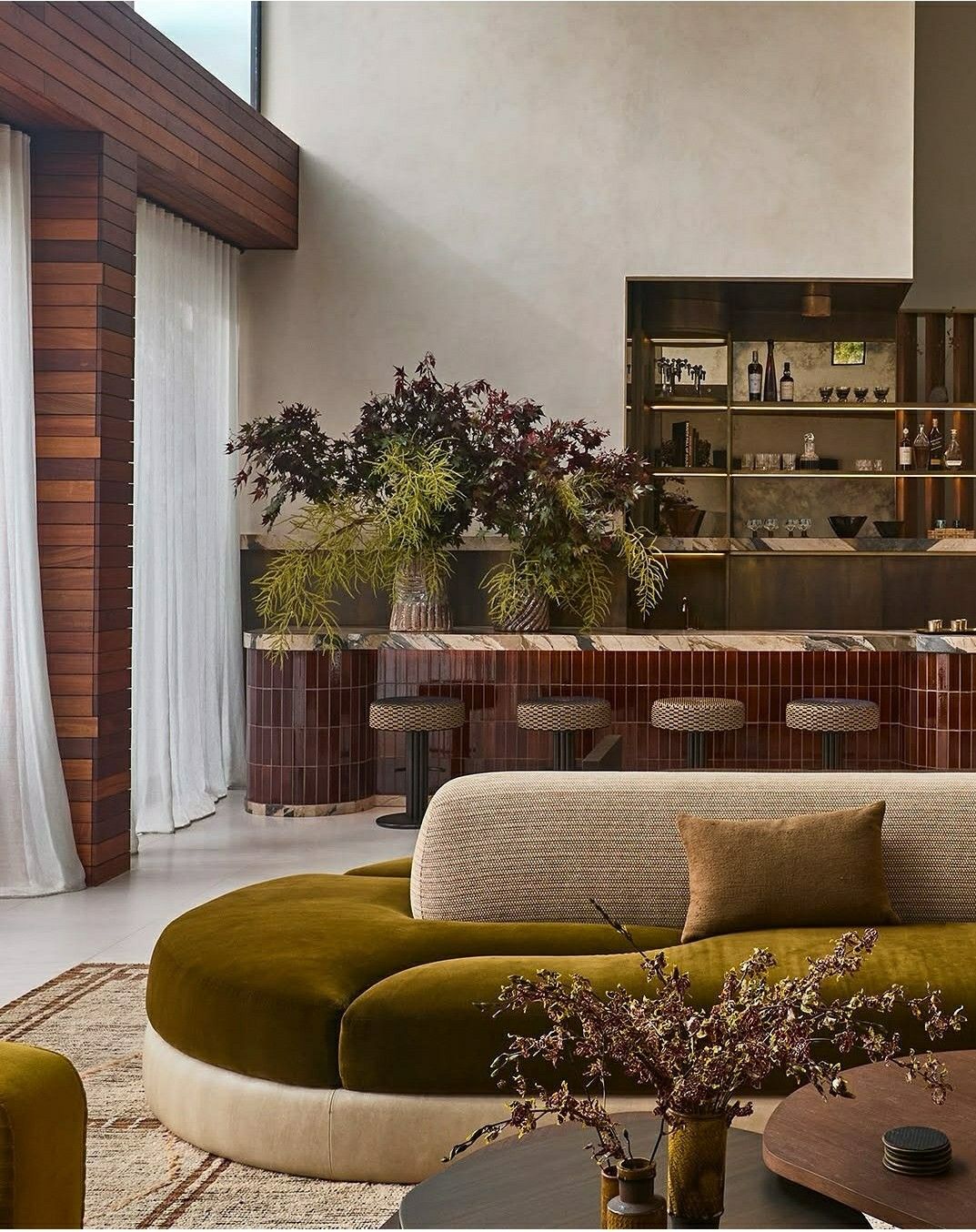
Interior design trends 2026 Calgary might sound like a phrase designed for search engines, and it is. But the trends themselves are genuine. After several years of rapid shifts in how Calgarians work, shop, dine, and seek wellness, the commercial interior design landscape in Calgary in 2026 is settling into patterns that reflect lasting behavioural changes rather than temporary reactions. The spaces being designed and built right now are not chasing what was popular two years ago. They are responding to what Calgary businesses and their customers actually need today.
At KINN Studios, we work across commercial sectors in Calgary, from cannabis retail and restaurant design to wellness environments and office interiors. What follows are the trends we are seeing in practice across those sectors, grounded in the projects moving through our studio and the conversations we are having with Calgary business owners right now.
Materiality Over Minimalism
The all-white, pared-back minimalism that dominated commercial interiors for much of the past decade is giving way to something more textural and grounded. Calgary's commercial spaces in 2026 are embracing richer material palettes: lime-wash plaster, fluted wood panelling, natural stone with visible grain, textured concrete, and aged metals. The common thread is materiality, surfaces that you want to touch, that change appearance under different lighting conditions, and that develop character over time rather than simply deteriorating.
This is not a swing toward maximalism. The spaces are still restrained in their composition. The difference is that restraint is being achieved through careful material curation rather than the elimination of visual information. A single wall of hand-trowelled plaster communicates more design intention than an entire room of painted drywall, and Calgary's most discerning business owners are recognizing the return on that investment.
Biophilic Design Beyond the Potted Plant
Biophilic design, the integration of natural elements into built environments, is not new. But its application in Calgary commercial interiors is becoming substantially more sophisticated. The living wall installed as a decorative afterthought is being replaced by genuinely integrated approaches: natural light optimization through glazing strategy, wood species selection that connects to the regional landscape, water features that provide acoustic benefit as well as visual calm, and spatial proportions that reference outdoor environments.
The most significant trends in commercial design are not visual. They are experiential.
For Calgary specifically, biophilic design carries additional relevance. The city's extreme seasonality, months of short days and cold temperatures followed by intense summer light, means that interior environments must compensate for what the exterior cannot provide for much of the year. Commercial spaces that bring natural light deep into floor plates, that use warm natural materials to offset winter greyness, and that create interior microclimates of comfort are not following a trend. They are solving a real problem.
Adaptive and Flexible Spaces
The rigid segmentation of commercial space, this area is for X, that area is for Y, is dissolving across sectors. Calgary restaurants are designing spaces that transition from co-working during the day to dining in the evening. Retail environments are incorporating event space for brand activations and community programming. Offices are being designed with modular partitioning that allows entire floor plates to be reconfigured without construction.
This trend is driven partly by economics. Calgary commercial lease rates make it imperative that every square foot generate value, and spaces that can serve multiple functions across the day deliver better returns than single-purpose environments. But it also reflects a genuine cultural shift. Calgarians expect their commercial environments to be more fluid and responsive than the fixed-purpose spaces of previous generations.
Designing for adaptability requires different thinking than designing for a single use case. Furniture must be durable enough to move frequently, lighting must be controllable across multiple scenes, and the base architecture must provide a neutral canvas that supports rather than constrains different configurations. 3D modelling has become essential to this process, allowing us to test multiple configurations of the same space and verify that each one works before any furniture is purchased or wall is built.
Wellness Integration Across Sectors
The influence of wellness design is no longer confined to salons and spas. In 2026, wellness principles, air quality, acoustic comfort, circadian lighting, and material toxicity, are being applied across Calgary's commercial interior landscape. Office tenants are specifying VOC-free finishes and demanding operable windows. Retail brands are investing in scent design and acoustic engineering. Even cannabis dispensaries are being designed with wellness-forward spatial qualities that elevate the customer experience beyond transactional retail.
This is partly a response to post-pandemic expectations about indoor environments, but it also reflects the growing body of research connecting interior environmental quality to measurable outcomes: employee productivity, retail conversion rates, and customer dwell time all improve in environments that prioritize human comfort.
Local Identity and Cultural Specificity
Calgary's commercial interiors are becoming more distinctly Calgarian. The generic, could-be-anywhere aesthetic that characterized much of the city's commercial development is giving way to spaces that draw on local material culture, regional landscapes, and the specific character of Calgary's neighbourhoods. A restaurant in Inglewood should feel different from one in Bridgeland, not because of applied theming, but because the design responds to the architectural character, demographic composition, and cultural energy of the neighbourhood.
This trend aligns with a broader movement toward place-based design that we see across our practice. The most compelling commercial environments are the ones that could only exist where they are. They reference their context not through literal representation but through material choices, spatial proportions, and design sensibilities that connect to the specific culture of the place. For Calgary, a city that is actively developing its cultural identity, this represents a significant opportunity for businesses willing to invest in design that is genuinely rooted.
Technology as Infrastructure, Not Feature
The visible technology fetish of the mid-2010s, touchscreens everywhere, LED displays on every wall, has faded. In Calgary's best commercial interiors of 2026, technology is being integrated as invisible infrastructure rather than showcased as a design feature. Lighting systems are automated and tunable but controlled behind simple interfaces. Audio is zoned and professionally calibrated but delivered through concealed speakers. Climate management is precise but silent.
The goal is an environment that feels effortless and intuitive, where the technology enhances the human experience without demanding attention. This approach requires deeper coordination between design, engineering, and technology disciplines from the earliest project stages, which is one of the reasons that studios with an architectural and systems-thinking approach are well positioned to deliver these environments.
At KINN Studios, we see trends not as style directions to follow but as signals of how people's relationships with built space are evolving. The best design responds to these shifts with intelligence and specificity rather than imitation. If you are planning a commercial interior project in Calgary and want to ensure it reflects where design is going rather than where it has been, we would welcome the conversation.