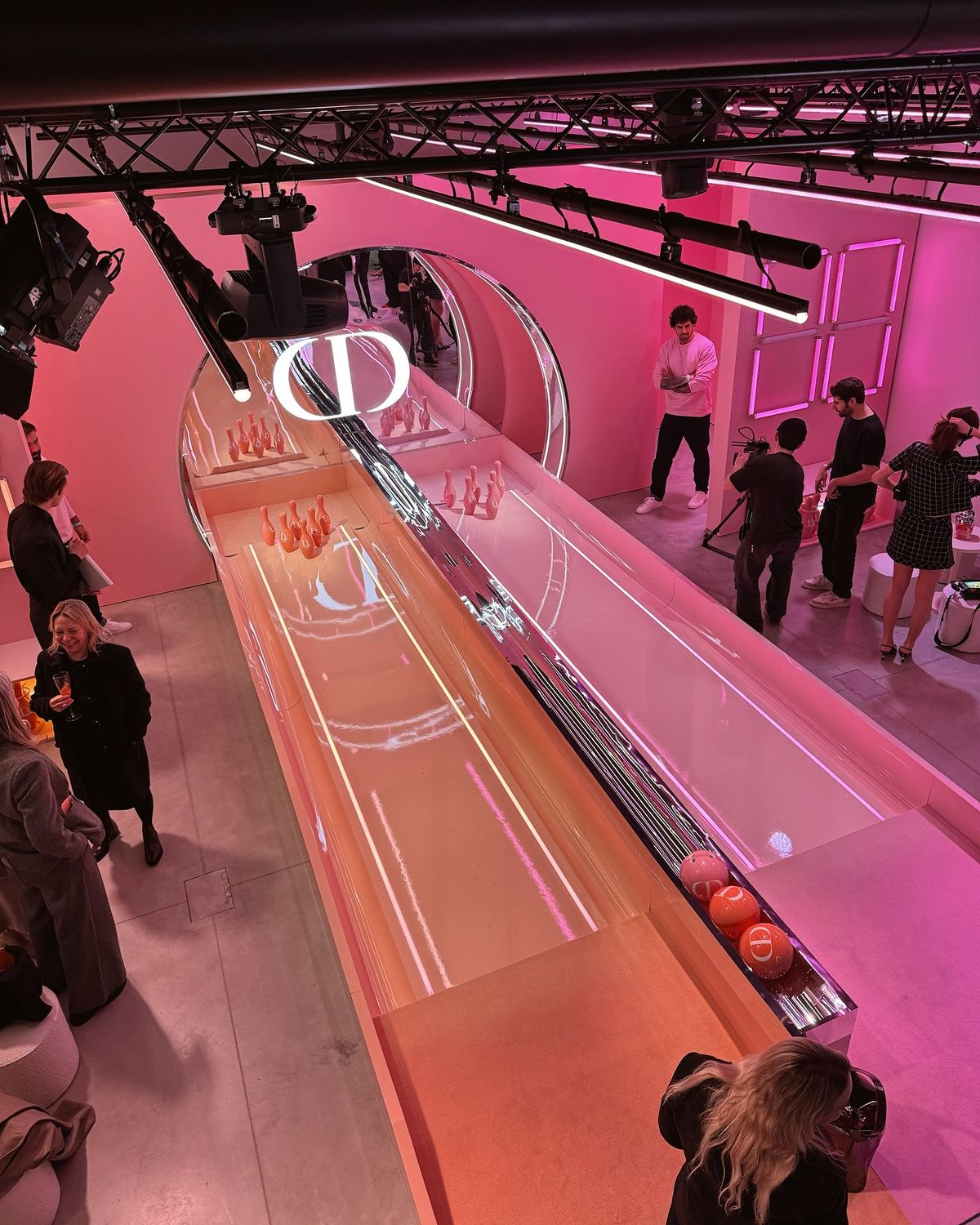
There is a moment in every well-designed experience when a person stops being an observer and becomes a participant. The threshold is not always obvious. It might be a shift in lighting, a change in material underfoot, or the sudden awareness that the space they have entered was conceived entirely around them. That moment — the instant when environment becomes experience — is what experiential design is built to create.
The discipline has existed, in various forms, for as long as humans have constructed spaces intended to provoke specific responses. Cathedrals are experiential design. So are Japanese tea gardens, world's fair pavilions, and the carefully orchestrated retail environments of luxury fashion houses. What is relatively new is the formalisation of the field, the convergence of architectural thinking with marketing strategy, and the growing recognition that in an age of infinite digital content, physical experience has become the most valuable form of communication a brand or institution can offer.
This guide is intended as a comprehensive introduction. It defines the discipline, distinguishes it from adjacent fields, examines the psychology that makes it effective, outlines the elements that separate exceptional experiential design from mere decoration, and offers guidance on when the investment makes strategic sense. Consider it a foundation — one that the more specialised explorations elsewhere in this journal build upon.
Defining Experiential Design
Experiential design is the practice of shaping physical environments to create specific human experiences. It is concerned not with how a space looks in a photograph but with how it feels to inhabit — how a person moves through it, what they notice, what they remember, and how their emotional state shifts from arrival to departure.
The field draws from architecture, interior design, graphic design, theatre, psychology, and narrative structure. It borrows architecture's concern with spatial sequence and material integrity, interior design's attention to human comfort and sensory detail, graphic design's precision with visual communication, theatre's understanding of pacing and revelation, and psychology's knowledge of how environments influence behaviour and emotion.
What distinguishes experiential design from any one of these disciplines is its insistence on synthesising them in service of a single, defined experience. An architect might design a beautiful lobby. An experiential designer designs what it feels like to walk through that lobby for the first time on a Tuesday afternoon in November, and ensures that feeling aligns with the building's purpose.
How It Differs from Event Planning
Event planning is primarily a logistical discipline. It coordinates vendors, manages timelines, handles catering and audio-visual requirements, and ensures that an event runs smoothly. These are essential functions, and good event planners are indispensable. But event planning begins with a programme and organises a space around it. Experiential design begins with an intended experience and constructs everything — the programme, the space, the sequence, the sensory details — to deliver it.
How It Differs from Interior Design
Interior design, particularly in its commercial applications, is concerned with creating environments that function well, look appropriate, and meet the needs of their occupants over time. Experiential design shares many of the same tools but applies them with a different emphasis. An interior designer might select a wall colour for its durability and aesthetic harmony. An experiential designer might select that same colour for the specific emotional response it triggers within the first three seconds of entering a space.
The distinction is not about quality or sophistication. It is about intent. Interior design optimises for sustained use. Experiential design optimises for impact.
Experiential design does not decorate space. It choreographs what it feels like to move through it.
The Psychology of Immersive Experiences
Understanding why experiential design works requires a brief excursion into how human beings process environments. The principles are well-documented in environmental psychology, and they underpin every significant design decision in the field.
The first principle is embodied cognition — the idea that our thinking is shaped not only by our brains but by our bodies and the environments they inhabit. When you enter a room with a high ceiling, you do not merely notice the ceiling height; your cognitive processes shift toward more abstract, creative thinking. When you sit in a warm space with soft textures, you do not merely feel comfortable; your social judgments become warmer and more generous. Experiential design leverages these connections deliberately.
The second principle is the peak-end rule, established by psychologist Daniel Kahneman. People judge an experience not by its average quality but by its peak moment and its final moment. This means that a two-hour activation with one extraordinary five-minute sequence and a beautifully designed exit will be remembered more favourably than a uniformly pleasant two-hour experience with no peaks. Experiential designers concentrate resources at peak and departure moments accordingly.
The third principle is spatial narrative — the human tendency to construct meaning from sequences of spatial encounters. We do this instinctively when walking through a museum, a garden, or a city street. Each space we enter adjusts our expectations for the next. Experiential design exploits this tendency by organising environments as narrative sequences: introduction, development, climax, resolution. The guest may not consciously recognise the structure, but they feel its effect.
The fourth principle is multi-sensory integration. Memory formation is dramatically stronger when multiple senses are engaged simultaneously. An experience that involves distinctive scent, texture, sound, and visual design creates neural pathways that a purely visual experience cannot. This is why the most memorable brand activations and cultural experiences engage the body comprehensively, not just the eyes.
The Five Elements of Exceptional Experiential Design
Through our work at KINN Studios in Calgary and our study of the discipline's best practitioners globally, we have identified five elements that consistently distinguish exceptional experiential design from competent decoration.
1. Spatial Intentionality
Every square metre serves a purpose. There are no dead zones, no leftover spaces filled with generic furniture or signage. The relationship between each zone and the next is considered, and the transitions between them are designed with as much care as the zones themselves. In our experience, the transitions are often where the most powerful moments occur.
2. Sensory Coherence
The visual, tactile, auditory, and olfactory dimensions of the environment tell the same story. There is no dissonance between what the space looks like and what it sounds or feels like. This coherence is what creates the sense of "being somewhere else" that defines immersive design. When one sense contradicts the others, the illusion collapses.
3. Emotional Arc
The experience has shape. It builds, peaks, and resolves. The guest's emotional state at the midpoint is different from their state at the entrance, which is different again from their state at the exit. This arc is not left to chance; it is designed with the same rigour that a composer applies to a symphony or a filmmaker applies to a screenplay.
4. Participatory Agency
The best experiential design invites participation without demanding it. Guests should feel that they are discovering the experience on their own terms, not being marched through a programme. This requires what we call "structured openness" — a clear spatial logic that guides movement while allowing individual exploration within it.
5. Material Integrity
The materials, finishes, and construction quality of an experiential environment communicate as loudly as any visual graphic. A brand activation built from cheap foam core and vinyl prints sends a message about the brand, regardless of how clever the concept is. Material choices must match the values the experience intends to communicate.
When Experiential Design Makes Strategic Sense
Experiential design is not the right solution for every project. It requires investment, time, and a level of strategic clarity that not every brief possesses. The discipline makes the most sense in specific contexts.
Brand launches and repositioning efforts benefit enormously, because physical experience can communicate brand values with a depth and immediacy that no digital campaign can match. A brand that wants to be understood as warm, crafted, and human should let people stand inside an environment that embodies those qualities.
Cultural institutions and public projects gain from experiential thinking because their success depends on visitor engagement, not just attendance. A museum exhibition designed experientially will have longer dwell times, higher satisfaction scores, and stronger word-of-mouth than one designed as a sequence of display cases.
Milestone celebrations — bridal showers, weddings, corporate anniversaries — justify the approach because the experience itself is the product. There is nothing for sale. There is no conversion metric. The only measure of success is whether the people in the room felt something they will remember.
Retail environments are increasingly adopting experiential principles as the distinction between shopping and entertainment continues to dissolve. A pop-up shop that simply displays products on shelves has already lost the argument for existing. One that creates an environment worth visiting, regardless of purchase intent, has a chance of earning loyalty.
The Experiential Design Process
At KINN Studios, our process moves through four phases that mirror the architectural design process from which experiential design descends.
The first phase is strategic definition. We work with the client to articulate the intended experience in precise terms: who is it for, what should they feel, what should they do, and what should they remember? This phase produces a design brief that becomes the touchstone for every subsequent decision.
The second phase is concept development. We generate spatial concepts — not decorative themes, but architectural ideas about how the experience will be structured in space. This is where narrative arc, spatial sequence, and sensory strategy take shape.
The third phase is design development. Concepts become detailed designs: floor plans, material palettes, lighting plots, furniture specifications, graphic treatments, and installation drawings. Everything is resolved to a level of detail that allows confident fabrication and installation.
The fourth phase is realisation. We oversee fabrication, installation, and the crucial final adjustments that happen on site. The gap between a good design and a great experience is often closed in the last hours before doors open, when the team walks the space as a guest would and makes the micro-adjustments that drawings cannot anticipate.
Calgary's creative community — its fabricators, artisans, lighting designers, and technical specialists — is a genuine asset in this process. The city's scale means that the relationships between disciplines are close and collaborative, resulting in a quality of execution that larger markets sometimes struggle to match.
If you are considering an experiential design project in Calgary or beyond, explore our portfolio to see the discipline in practice, or reach out to discuss your project.