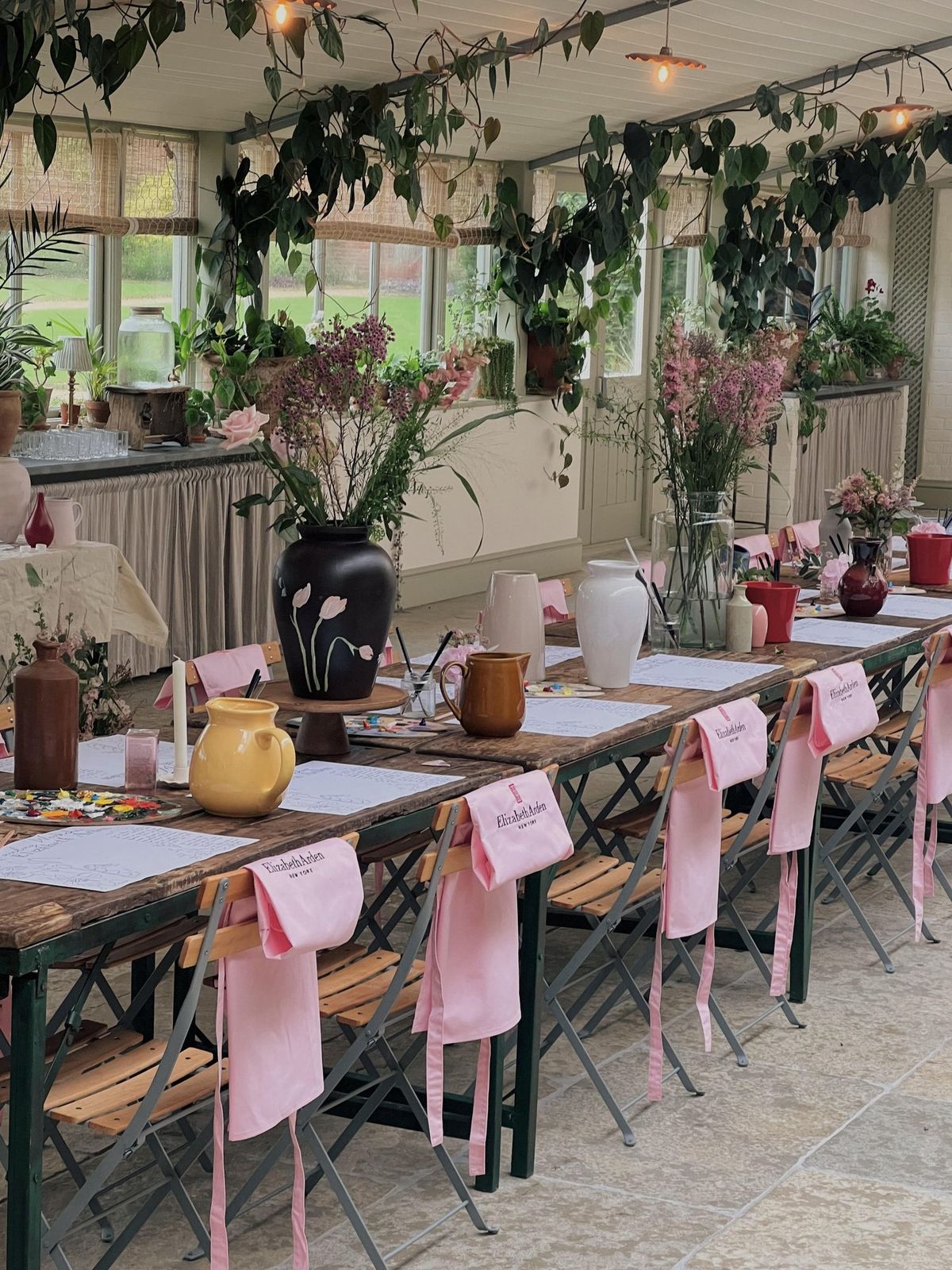
A brand activation is not a party. It is not a pop-up. It is not a sponsored event with a logo banner and a gift bag. At its best, a brand activation is a designed encounter between a company and its audience — one that is spatial, sensory, and strategic. It transforms a brand from something people scroll past into something they physically inhabit, even if only for an afternoon.
In Calgary, where the market rewards authenticity and audiences are discerning enough to know when they are being marketed to versus when they are being invited into something genuine, the stakes of getting this right are meaningful. The city's event landscape is maturing rapidly. Generic activations get ignored. Considered ones get shared, remembered, and talked about at dinner.
This guide breaks down every phase of planning a brand activation in Calgary — from the strategic thinking that should happen before a single mood board is created, through venue selection, activation formats, design development, production, and post-event measurement. Whether you are a local brand planning your first activation or a national company entering the Calgary market, the principles here will serve you well.
What a Brand Activation Actually Is
The term gets used loosely, so let us establish clarity. A brand activation is a designed experience intended to drive a specific consumer action through direct interaction with a brand. It sits at the intersection of marketing strategy and experiential design — borrowing the precision of the former and the spatial intelligence of the latter.
Unlike traditional advertising, which communicates at people, an activation creates conditions for people to discover a brand on their own terms. The best ones feel less like campaigns and more like cultural moments. Think of a skincare brand that transforms a heritage building in Inglewood into a sensory laboratory, or a local brewery that builds a temporary tasting room from reclaimed materials in East Village. These are not decorations applied to a space. They are environments conceived from scratch to embody a brand's values.
In Calgary, we have seen the format evolve considerably. What once meant a sampling table at a trade show has given way to fully immersive installations, multi-day experiences, and activations that function as genuine contributions to the cultural fabric of a neighbourhood. The audience expects more. The opportunity, accordingly, is larger.
Brand Activations vs. Sponsorships vs. Event Marketing
A sponsorship puts your logo on someone else's event. Event marketing promotes an existing occasion. A brand activation creates something entirely new — a designed environment that would not exist without the brand behind it. The distinction matters because it changes every decision downstream, from budget allocation to creative direction. If you are considering which approach suits your objectives, our experiential design services can help clarify the path.
Setting Objectives Before Setting a Budget
The most common mistake in activation planning is beginning with logistics. Venue searches, vendor lists, date holds — these feel productive but are premature without a clear strategic foundation. Before anything else, answer three questions with absolute specificity.
First: what do you want people to do? Not feel. Do. "Increase brand awareness" is not an objective; it is a wish. "Generate 200 email sign-ups from Calgary consumers aged 25 to 40" is an objective. "Drive 50 first-time purchases through an exclusive product preview" is an objective. The specificity forces design decisions that a vague brief never will.
Second: who, precisely, are you designing this for? Calgary's demographics are layered. The downtown professional population has different expectations than the families in the northwest suburbs, the creative community along 17th Avenue, or the university crowd near the Beltline. An activation designed for "everyone" will connect with no one.
Third: what should the experience communicate about the brand that cannot be communicated through a screen? This question is the most important and the most frequently skipped. If the answer is nothing, a digital campaign would be more efficient. The justification for physical activation is that certain brand qualities — texture, craft, scale, warmth, precision — can only be conveyed through presence.
A brand activation is not about showing people your brand. It is about letting them stand inside it.
Activation Formats That Drive Engagement
Not every activation needs to be a large-scale production. The format should match the objective, the audience, and the brand's existing relationship with the Calgary market. Here are the activation types we find most effective.
Pop-Up Brand Experiences
A pop-up transforms a temporary space into a branded environment, typically for a defined period of days or weeks. The power of the format is its scarcity: the experience is available for a limited time, which creates urgency and makes attendance feel like participation rather than consumption. In Calgary, vacant retail units in the Beltline, industrial spaces in Ramsay, and heritage buildings in Inglewood have all served as exceptional pop-up venues.
The design challenge is creating an environment that feels fully realised despite its temporary nature. Guests should not see bare walls or exposed infrastructure. They should step into a world that feels as considered as any permanent retail interior. This is where the discipline of experiential design becomes essential. The space must tell a story from the moment of entry to the moment of departure.
Custom Installations and Designed Moments
Sometimes the most effective activation is a single, precisely designed object or environment placed within a larger context. A custom installation in a high-traffic public space, a designed photo moment at an existing event, or a bespoke sensory element integrated into a retail environment. These interventions are smaller in footprint but can be extraordinarily potent in impact.
For the Ma Chérie bridal shower, KINN Studios designed and fabricated a bespoke perfume cart that functioned as both an installation and an interactive experience. Guests could explore and layer fragrance notes, creating a personalised scent to take home. The cart was not an add-on. It was the centrepiece of the spatial narrative, an object that created behaviour, invited participation, and anchored the entire experience. The same principle applies to commercial brand activations: a single, impeccably designed element can carry more weight than an entire room of generic decor.
Photo Moments and Shareable Environments
The currency of a brand activation is social amplification, and the most effective way to generate it is not to ask people to post but to create conditions where posting feels natural. A genuinely beautiful, surprising, or delightful environment generates organic content because people want to share what moves them. The trick is designing for the photograph without designing for the camera. The space should feel immersive and rewarding to inhabit in person. The shareability follows.
This means thinking about lighting, backdrop composition, colour contrast, and the visual rhythm of the space. It also means thinking about what the image communicates when stripped of its context: does a photograph of your activation convey the brand's values even without a logo visible? If yes, the design is working. If the image only makes sense with a hashtag overlay, the experience is not doing enough.
Styled Setups and Experiential Catering
Brand activations are not limited to product launches and marketing campaigns. The principles of experiential design apply equally to private events, corporate gatherings, and celebrations where a brand or a host wants the environment to communicate something specific about who they are.
We have seen this crossover most clearly in our collaboration with Deep's Delights Catering, a Calgary-based Indian-fusion catering studio whose styled dessert setups function as a form of brand activation in their own right. Their approach treats food presentation as spatial design: the dessert table is not a buffet, it is an installation. The display architecture, the colour story, the material palette of the risers and serving pieces, all of it is conceived as a coherent environment that guests encounter as an experience, not merely a menu.
This integration of food, styling, and spatial narrative is where private events and brand activations converge. Whether the client is a corporation launching a product or a couple celebrating an engagement, the design question is the same: how do you create an environment that communicates identity through every surface and every interaction?
The best brand activations do not ask to be photographed. They earn it.
Choosing a Calgary Venue That Amplifies Your Brand
Venue selection for a brand activation operates on different logic than venue selection for a corporate event or a wedding. You are not looking for a neutral container. You are looking for a space whose existing character either reinforces your brand narrative or provides a deliberate contrast against which your brand identity becomes more vivid.
Calgary offers an unusually varied palette of activation venues, many of which remain underutilised by brands that default to hotel ballrooms and convention centres.
Industrial and Warehouse Spaces
The Ramsay and Manchester districts are rich with raw industrial spaces — concrete floors, exposed steel, generous ceiling heights. These work exceptionally well for brands whose identity leans toward craft, authenticity, or maker culture. The blank-canvas quality allows a design team to build an entire world without fighting existing decor.
Heritage and Cultural Venues
Spaces like Venue 308, the King Eddy, or the various gallery spaces in the Beltline carry inherent cultural weight. They signal sophistication and community connection without a single design intervention. For premium or culturally oriented brands, the venue itself becomes a silent endorsement.
Outdoor and Public Spaces
Calgary's public realm — particularly along the Riverwalk, in East Village, and within the emerging Green Line corridor — offers opportunities for activations that integrate with daily urban life rather than requiring a deliberate visit. The logistical requirements are more complex (permits, weather contingencies, power supply), but the visibility and foot traffic can be extraordinary.
Retail and Commercial Interiors
For activations that blur the line between experience and commerce, consider transforming a retail environment. A pop-up within an existing storefront or a takeover of a vacant commercial unit can create an intimate, transactional environment that feels both curated and accessible.
Whichever direction you take, visit the space at the same time of day your activation will run. Understand the natural light, the acoustic character, the pedestrian flow patterns, the sight lines from the entrance. These details are not secondary to the creative concept. They are the foundation of it.
Designing the Activation Experience
This is where spatial thinking becomes essential — and where the difference between an event planner and an experiential designer becomes most apparent. Event planning is logistics. Experiential design is architecture applied to narrative.
Every activation should have a spatial sequence: an arrival that establishes mood, a core experience that delivers the brand message, and a departure that crystallises what the guest just encountered. This is not unlike the narrative arc of a film or the spatial progression of a gallery exhibition. The difference is that the medium is physical space, and the audience is moving through it in real time.
The Arrival Moment
The first eight seconds of an activation determine whether a guest commits or retreats. The arrival must do three things simultaneously: signal that this space is different from the street or corridor they just left, communicate the brand's tone without a single word of copy, and create a gentle but irresistible pull toward the interior.
The Core Experience
This is the centrepiece — the moment or series of moments that justify the activation's existence. It might be a product interaction, a sensory installation, a participatory element, or a reveal. Whatever it is, it should be the thing that is impossible to communicate through a photograph alone. It must be worth being present for.
The Departure and Takeaway
What guests leave with — physically and emotionally — determines whether the activation lives beyond its runtime. This is not about swag bags. It is about designing a final moment that encodes the brand in memory. A considered departure might be a personalised element, an unexpected gesture, or simply a beautifully designed transition back into the everyday that makes the ordinary feel slightly altered by what came before.
The Activation Services Checklist
Planning a brand activation in Calgary requires coordinating strategy, design, fabrication, logistics, and measurement. Most activations that underperform do so not because of poor execution but because of incomplete planning — a missing service, an overlooked requirement, or a capability gap that was not identified until it was too late to address. Use this phase-by-phase checklist to ensure nothing falls through the cracks.
Phase One: Strategy and Objectives
- Primary objective. What is the single most important outcome? Brand awareness, lead generation, product trial, media coverage, or community engagement? Define one primary objective. Secondary objectives are fine, but the primary one should drive every design decision.
- Target audience. Who specifically needs to be in the room? Define demographics, psychographics, and the audience's existing relationship with your brand. A brand activation for existing customers requires a fundamentally different design approach than one for prospective customers.
- Key performance indicators. How will success be measured? Attendance, social impressions, email captures, sales conversions, media placements, or qualitative feedback? Define these before design begins so the activation can be designed to produce measurable results.
- Brand guidelines and constraints. What are the non-negotiable brand elements? What flexibility exists for creative interpretation? The design team needs to understand both the rules and the permissions.
- Budget framework. Establish a realistic budget range that accounts for strategy, design, fabrication, venue, staffing, technology, and contingency. A common mistake is allocating budget only for the visible elements — the physical installation — without accounting for the strategic and operational infrastructure that makes it work.
Phase Two: Design and Creative Development
- Concept development. The creative concept that unifies the entire activation. This is not a theme or a colour palette — it is the central idea that determines how the audience will experience the brand. A strong concept makes every subsequent design decision easier because it provides a clear criterion: does this element serve the concept, or does it not?
- Spatial design and floor planning. How guests will move through the space, what they will encounter at each stage, and how the spatial sequence supports the narrative arc. This requires detailed floor plans and, ideally, 3D modelling that allows the design team to test sightlines, circulation, and spatial proportions before committing to fabrication.
- Material and fabrication specifications. Detailed documentation of every physical element: materials, finishes, dimensions, structural requirements, and assembly sequences. This documentation is the bridge between design intent and fabricated reality.
- Lighting design. A designed lighting scheme that supports the spatial narrative, creates atmosphere, and directs attention. This is not decorative uplighting — it is a designed environment where light quality, colour temperature, and intensity are controlled intentionally across every zone.
- Sound design. The acoustic environment, including ambient sound, music programming, and any technology-driven audio elements. Sound is one of the most underutilised tools in Calgary brand activations, and it is one of the most emotionally impactful.
Phase Three: Production and Fabrication
- Fabrication. Custom-built elements — walls, structures, display systems, signage, and installations — require fabrication partners who can interpret design documentation accurately and deliver on schedule. Calgary has a capable fabrication community, but lead times of four to eight weeks for custom work are typical. Plan accordingly.
- Venue booking. Each Calgary venue brings its own architectural character, practical constraints, and audience associations. Secure the venue early — desirable non-traditional spaces in Calgary book quickly, particularly during the summer event season.
- Permits and insurance. Depending on the venue and format, you may need a City of Calgary business licence, a special event permit, commercial general liability insurance, and potentially AGLC licensing for alcohol service. Start the permit process at least six weeks before the event date.
- Technology infrastructure. If the activation includes interactive installations, projection, or data capture technology, the technical requirements — power, internet, rigging points, climate control for sensitive equipment — must be confirmed with the venue and integrated into the spatial design.
- Staffing. Brand ambassadors, event managers, technical operators, and security personnel. The staffing plan should be informed by the spatial design — each zone may require different staffing levels and skill sets.
Phase Four: Execution and On-Site Management
- Load-in and installation. A detailed schedule that sequences fabrication installation, technology setup, lighting programming, and styling in the correct order. Allocate more time than you think you need — the final adjustments that elevate a good activation to a great one require time that a compressed schedule eliminates.
- Technical rehearsal. If the activation includes any technology, interactive elements, or timed sequences, a full technical rehearsal before doors open is essential. Test everything under actual conditions, not theoretical ones.
- Real-time management. An on-site manager with the authority and expertise to make decisions in real time. Issues will arise — the quality of the experience depends on how quickly and effectively they are resolved.
- Content capture. Professional photography and videography that documents the activation for post-event marketing use. Brief the content team on the design intent so they capture the spatial experience, not just individual moments.
A checklist is not a substitute for design thinking. It is a framework that ensures design thinking has room to operate.
Calgary-Specific Logistics and Considerations
Planning an activation in Calgary carries particular logistical dimensions that national brands and first-time organisers often underestimate.
Weather contingency is non-negotiable. Even in the summer months, Calgary's climate can shift dramatically within hours. Any outdoor activation requires a weather plan that is not merely a fallback but a fully designed alternative. The Chinook effect — sudden warm winds that can raise winter temperatures by 20 degrees in a matter of hours — means that even January activations have outdoor potential, but planning for both extremes is essential.
Municipal permitting in Calgary varies significantly by district and format. Stephen Avenue and Olympic Plaza have established event permit processes, but activations in less conventional locations may require engagement with multiple city departments. Begin permit conversations a minimum of six to eight weeks before the activation date.
Vendor relationships matter here more than in larger markets. Calgary's creative community is collaborative and interconnected. Working with local fabricators, AV specialists, caterers, and florists not only supports the ecosystem but often results in more committed, flexible partnerships than engaging national suppliers who treat Calgary as a secondary market.
Measuring What Matters
If the objectives were defined with precision at the outset, measurement becomes straightforward. But too many activations default to vanity metrics — foot traffic, social media impressions, "buzz" — without connecting them to the commercial goals that justified the investment.
The most useful activation metrics fall into three categories. First, engagement quality: not how many people attended, but how long they stayed, how deeply they interacted, and what they did at each station. Second, conversion actions: email captures, product trials, QR code scans, direct purchases, or consultation bookings. Third, earned media and social amplification: not just volume, but sentiment and the quality of user-generated content.
Build measurement into the design itself. A registration moment at the entrance captures attendance data. A participatory element at the core experience generates shareable content organically. A thoughtful departure creates the conditions for unsolicited social posting. The design and the measurement are not separate workstreams. They are the same thing.
The most valuable post-event analysis goes beyond raw numbers to assess whether the design achieved its strategic intent. Did the spatial design produce the circulation patterns and dwell times intended? Did the sensory environment create the emotional tone the brand wanted? Did the immersive elements produce the engagement levels that justified the investment? These design-specific metrics inform future activations with a precision that attendance counts alone cannot provide.
When to Bring in an Experiential Design Partner
If your brand activation is a sampling table at a trade show, you probably do not need an experiential designer. If it is a designed environment intended to shift perception, generate media, and create a genuine connection between your brand and a Calgary audience, you almost certainly do.
The right design partner brings spatial intelligence — an understanding of how people move through space, how materials and lighting affect mood, how a narrative unfolds in three dimensions. They also bring an outsider's perspective on your brand, which is often more valuable than insider knowledge. The things that are obvious to you are invisible to your audience, and vice versa. A skilled designer translates between the two.
At KINN Studios, we approach brand activations as spatial design problems. Every activation we undertake begins with the strategic questions outlined above, moves through a rigorous design development process, and results in an environment that is as considered as any permanent interior or public installation. The medium is temporary. The impression should not be.
If you are planning a brand activation in Calgary and want to explore what a design-led approach might look like, we would love to hear about it. You can also explore our completed projects for a fuller picture of the environments we create.