There is a version of event design where someone picks a colour palette from a trend report, orders matching linens, arranges some florals, and calls it done. It looks fine. It photographs adequately. And it feels exactly like every other event held in that venue that year.
Then there is the version where the environment is built from scratch around a single question: who is this for, and what should they feel when they walk in? That is bespoke event design. It is not about following trends or replicating Pinterest boards. It is about creating a physical experience that could only exist for this person, this occasion, this moment.
In Calgary, the demand for bespoke event design is growing. More people are recognizing that their most significant celebrations deserve the same level of design thinking that goes into a luxury retail space, a gallery exhibition, or a boutique hotel. Not more decorations. Better design.
What Bespoke Event Design Actually Means
The word bespoke comes from tailoring. A bespoke suit is not pulled from a rack and altered. It is cut from raw fabric to fit one body. Bespoke event design follows the same principle. The environment is not selected from a catalogue of packages. It is conceived, designed, and built for a single occasion.
This means every element is intentional. The spatial layout is designed around how guests will move through the room, where they will gather naturally, and what they will see at each moment. The materials are chosen for texture, weight, and how they interact with light. The colour palette is drawn from something meaningful, not a seasonal trend, but the client's heritage, the venue's architecture, or the emotional tone of the occasion. Even scent and sound are considered as design elements, not afterthoughts.
Bespoke event design is not event planning. Event planning is logistics: timelines, vendor coordination, catering, guest management. Those things matter, and a good planner is essential. But the design layer is something different entirely. It is the physical experience itself. The environment your guests inhabit. The thing they remember, photograph, and talk about long after the logistics have faded from memory.
When we talk about bespoke design at KINN Studios, we mean an environment that is conceived as a spatial composition. The same way an architect designs a building to shape how people feel inside it, we design events to shape how guests experience a celebration. The room is not a backdrop. It is the celebration.
The Ma Cherie Story: A Case Study in Bespoke Design
One of the clearest examples of what bespoke event design looks like in practice is Ma Cherie, a bridal shower we designed at Venue 308 in Calgary. The brief was personal: a celebration for a bride whose heritage, personality, and love story deserved more than a standard shower format.
The concept started with the bride herself. Her connection to fragrance became the organizing principle for the entire event. We designed a custom perfume cart where guests could blend their own scents, turning a personal passion into an interactive experience that gave everyone something to take home. The floral installations were not generic arrangements. They were designed as architectural elements, scaled to the venue's proportions and composed in a colour palette drawn from the bride's South Asian heritage.
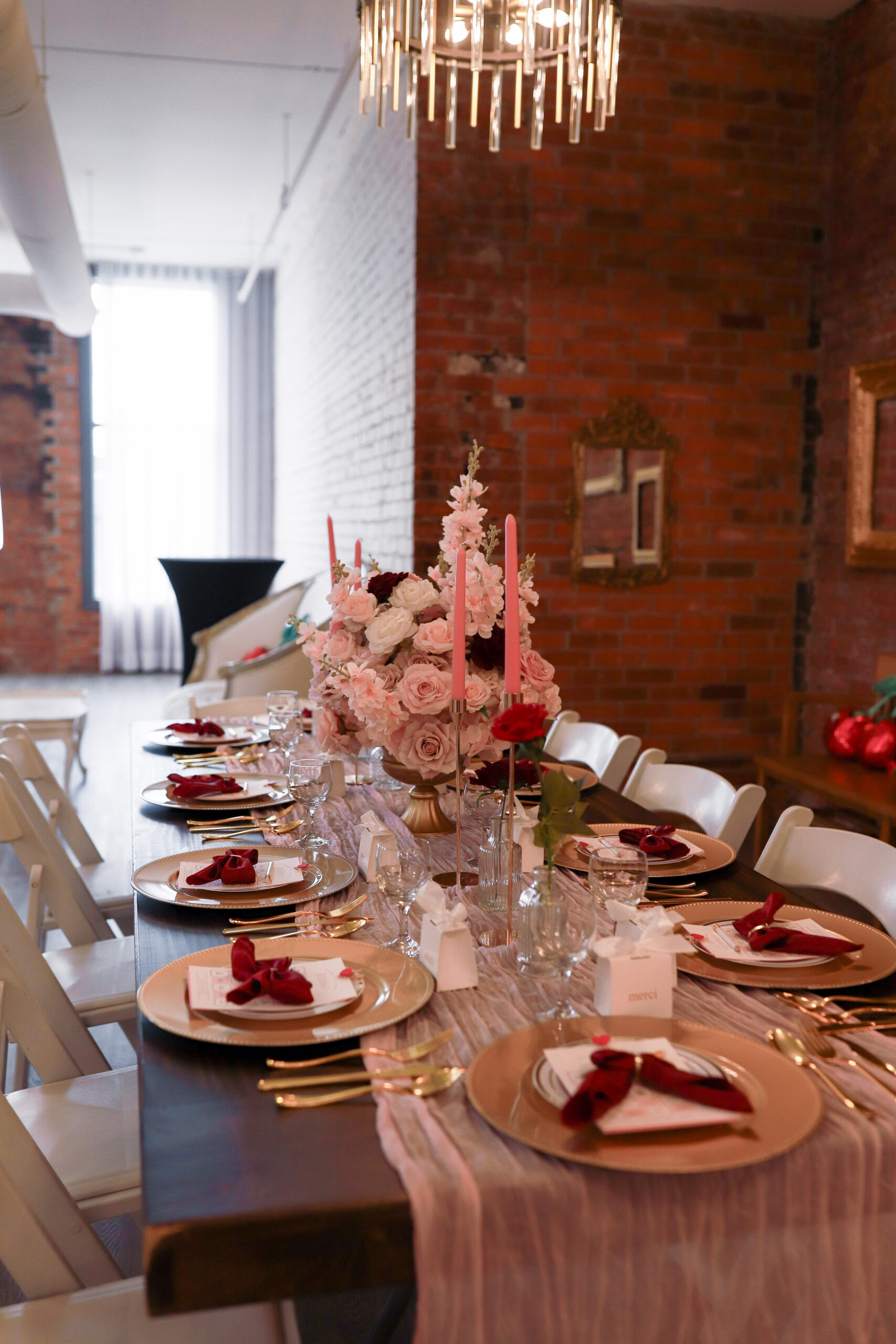
What made this project bespoke was not the budget or the scale. It was the thinking. The layout was designed so that guests moved through a sequence of moments: arrival, the perfume experience, the gathering space, the dining environment. Each zone had its own spatial character, but they all belonged to the same design language. The materials, the lighting, the typography on the signage, the vessels holding the florals, all of it was part of a single, coherent vision.
This is what architectural thinking brings to event design. It is not about placing beautiful objects in a room. It is about designing the room itself as an experience, understanding how people move through space, what draws their eye, and how the environment shapes the emotional arc of the occasion.
A bespoke event is not decorated. It is designed. Every surface, every sight line, every moment of discovery is intentional.
Types of Bespoke Events
Bespoke event design applies to any celebration where the hosts want the environment to feel singular and personal. The format varies, but the design approach is the same: start with the people, understand the occasion, and build an environment that could only exist for them.
Bridal Showers and Wedding Design
Weddings and bridal showers are where bespoke design has the most natural fit. These are the celebrations where personal meaning matters most, and where a generic approach feels most inadequate. For South Asian weddings and multicultural celebrations, bespoke design is especially important. These events carry layers of cultural significance that a standard Western event template simply cannot accommodate. The colours, the rituals, the spatial requirements, the way families gather, all of it demands design that understands and honours the traditions while creating something contemporary and elevated. Bridal shower design in Calgary has evolved significantly. The best ones feel like curated experiences rather than catered lunches.
Milestone Birthdays and Anniversary Celebrations
A 40th birthday. A 25th anniversary. A retirement after a distinguished career. These are occasions that deserve more than a rented hall with balloons. Bespoke design for milestones often starts with the guest of honour's story: their passions, their aesthetic, the things that define them. The environment becomes a reflection of a life, not a generic party theme.
Intimate Brand Dinners
When a brand hosts a private dinner for its most valued clients, the environment is the message. The design of the table, the lighting, the materials, the spatial flow from cocktails to seating, all of it communicates what the brand values. These events sit at the intersection of bespoke personal celebration and professional event design, and they require the same level of intentional, ground-up design thinking.
Curated Private Gatherings and Garden Parties
Not every bespoke event is a large-scale production. Some of the most memorable are intimate: a garden party for 15 guests, a private dinner in a home, a curated evening in a studio space. The smaller the guest count, the more every detail is noticed, and the more the design matters. These gatherings reward restraint, material quality, and the kind of spatial thinking that makes a small space feel extraordinary.
How Much Does Bespoke Event Design Cost in Calgary?
Pricing for bespoke event design in Calgary varies widely because, by definition, no two projects are the same. That said, having a realistic sense of investment is important for planning, and we believe in transparency.
For intimate gatherings of 10 to 30 guests, bespoke design in Calgary typically ranges from $3,000 to $8,000. This includes the full design process: concept development, spatial planning, material sourcing, and on-site styling. It covers the design layer, the environment your guests experience, though venue rental, catering, and entertainment are separate.
For mid-scale celebrations of 30 to 80 guests, the investment generally falls between $8,000 and $20,000. At this scale, the design often includes custom signage, more complex floral installations, designed lighting schemes, and 3D spatial models that let you experience the event before it happens.
For luxury events with custom fabrication, budgets start at $20,000 and scale upward. This is the territory of fully custom-built environments: bespoke structures, fabricated installations, imported materials, and design elements that are conceived and produced specifically for the event. These projects typically require longer lead times and involve collaboration with fabricators, artisans, and specialized trades.
What is included across all tiers: spatial design and layout planning, concept development and mood direction, 3D models or renderings, material and vendor sourcing, and on-site styling and installation. What varies is the complexity of the design, the scale of custom fabrication, and the number of designed elements in the environment.
Why an Architect-Led Approach Changes Everything
Most event designers start with a Pinterest board. They collect images of events they admire, identify a colour palette and a style direction, and then source vendors and products that match. This approach can produce attractive results. But it has a ceiling, because it is assembling references rather than designing from first principles. True bespoke event design requires a fundamentally different starting point.
An architectural approach starts somewhere different. It starts with the space itself. What are the dimensions? Where does the light fall at the time of the event? What are the sight lines from the entrance? How will 40 people naturally circulate through this room? Where are the bottlenecks, and where are the opportunities for moments of pause and discovery?
This is not abstract theory. It is the difference between a beautifully styled table that happens to be in a room, and an environment where the table, the room, the lighting, the spatial sequence from arrival to departure, and the position of every designed element are all part of a single, intentional composition.
Understanding how people move through environments is central to architectural training. Architects spend years studying circulation, proportion, materiality, and the relationship between spatial design and human behaviour. When that knowledge is applied to event design, the results are fundamentally different. Guests may not be able to articulate why the event felt so good, but they felt it. The flow was effortless. Every angle looked intentional. There was a sense of discovery as they moved through the space. Nothing felt crowded, nothing felt empty, and nothing felt accidental.
3D spatial models are one of the most practical advantages of this approach. Before anything is built, before a single flower is ordered or a fabric is cut, you can walk through the event in a digital model. You can see the proportions. You can check sight lines. You can experience the spatial sequence from a guest's perspective. This eliminates the guesswork that plagues traditional event design, where the client does not truly see the environment until the day of the event.
An architect does not decorate a space. An architect designs how it feels to be inside it.
Planning Your Bespoke Event
The best bespoke event design projects in Calgary are the ones where the design process has room to breathe. We recommend booking 8 to 12 weeks in advance for most celebrations. For events requiring custom fabrication, built structures, or imported materials, 3 to 4 months of lead time is ideal. This allows for proper concept development, material sourcing, vendor coordination, and the inevitable refinements that make the difference between good and extraordinary.
When you come to the discovery conversation, bring whatever feels right. Some clients arrive with a clear vision and a folder of references. Others come with nothing more than a feeling they want to create. Both are perfect starting points. What helps most is honesty about what the occasion means to you, who the guests are, and what you want them to experience. The design work is our responsibility. The personal meaning is yours.
If you are planning a celebration in Calgary and want an environment that feels truly yours, not rented, not replicated, not borrowed from a catalogue, bespoke event design is the path forward. You can explore our bespoke event design services or reach out directly to start the process.
Every detail matters. That is not a tagline. It is how we work.